Net zero is ‘madness’, senator says, and many locals agree
The Nationals’ Matt Canavan is on the warpath, with Member for Barker Tony Pasin in a supporting role.

This story is now free to read. Help Murray Bridge News tell more stories like this by subscribing today.
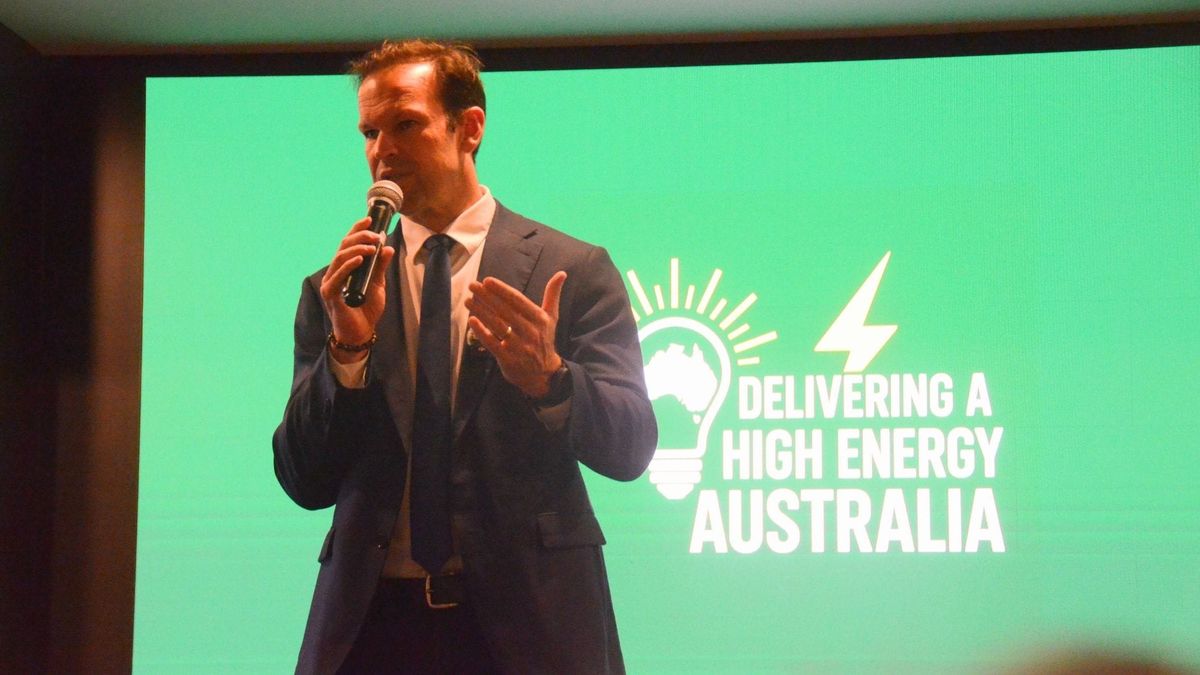
The fight against climate change is “madness” and “a Trojan horse for socialism”, a crowd has heard at a political event in Murray Bridge.
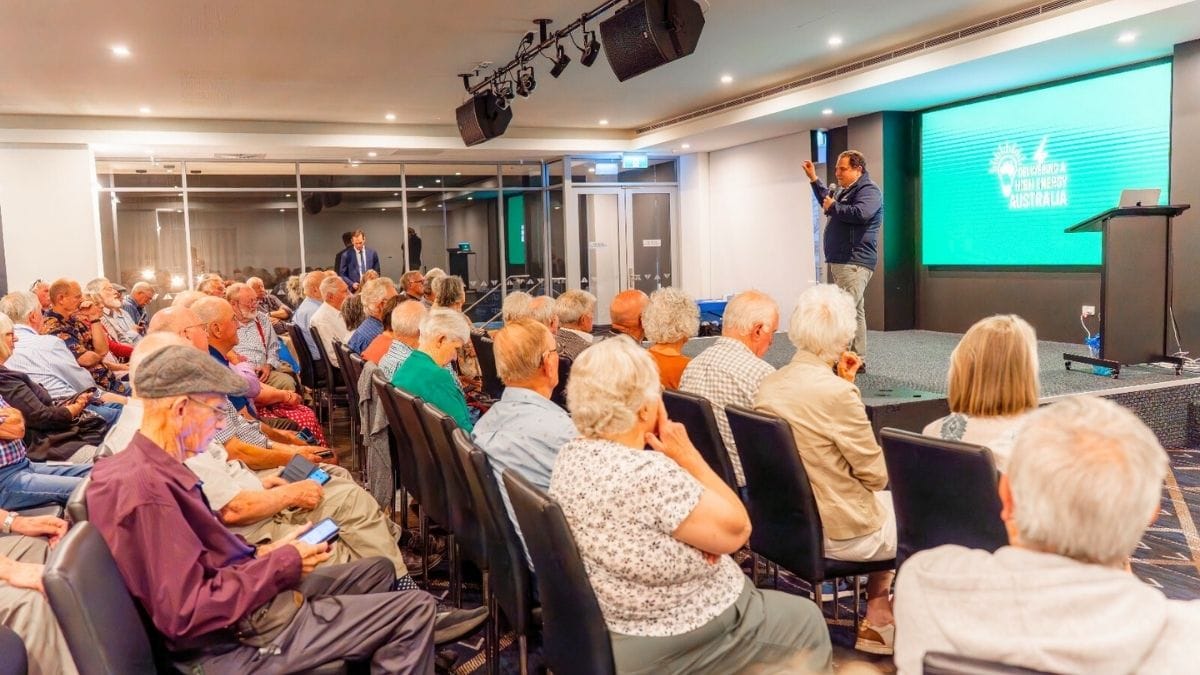
More than 100 locals came to hear from Nationals Senator Matt Canavan at Murray Bridge’s Bridgeport Hotel on December 15.
It was more of a rally than a debate, tailored for friendly ears and sprinkled with Sky News clips and highly edited videos of his opponents.
In the drive to reduce carbon emissions, Senator Canavan railed, governments would force everyone to “change everything we do in 25 years”.
“Are you going to eat bugs?” he asked, images of Soviet dictators on a screen behind him.
Audience members booed references to electric cars, China, not eating steak, and Climate Change Authority boss Matt Keane.
Meanwhile, the senator characterised people who supported net zero as inner-city hypocrites with double-barrelled surnames who liked to sip lattes, eat sourdough bread and fly overseas on polluting jets.
Hold on – what is net zero all about?
In 2021, in line with international efforts to limit the effects of climate change, the federal government promised to reduce Australia’s greenhouse gas emissions to “net zero” by 2050.
That would mean reducing emissions across all sectors of the economy, including energy, agriculture, industry and transport.
If possible, it would also mean removing harmful gases from the atmosphere.
“Net zero” refers to a point where the amount of greenhouse gas emitted in Australia would be the same as the amount of gas being removed from the atmosphere.
If nations around the world could reach that point, that would slow the rate of climate change, which has already warmed the Earth by 1.2 degrees and increased the frequency and intensity of extreme weather events.
But local audience members laughed at the suggestion that reducing carbon emissions could prevent bushfires or cyclones.
Besides, Senator Canavan suggested: if Australia alone couldn’t change the world, why try?
The cost of achieving net zero had been estimated at up to $9 billion, he said – $250,000 per Australian.
“This is a massive wealth transfer, a massive scam ... that impoverishes the industrial world and enriches (developing) countries,” he said.
“We’re losing jobs, we’re losing industry … why would we cut our emissions faster than the rest of the world?”
He argued that Australia had over-promised and under-delivered on emissions reduction.
We had committed to the second-highest level of cuts in the developed world, which he suggested was too much.
But if changes in land use were excluded from the national figures, Australia had actually done almost nothing to reduce its emissions since 2005.
Moving forward, the task would only get more difficult.
Net Zero Australia modelling had suggested that an extra 5.1 million hectares of forest might need to be planted by 2050 to achieve Australia’s emission reduction goals, and the senator suggested millions more hectares would need to be covered with solar panels and wind turbines.
“We don’t want our country blanketed with that stuff,” he said.
“That won’t be Australia, it’ll be a different nation.
“I don’t want 12 million hectares of our country industrialised, with stuff made in China.”
What’s the plan, then?
Instead, whether in a future Coalition government or in opposition, the Nationals would:
- prioritise lower power prices over emissions reduction
- cut emissions at the same pace as comparable nations
- support all technologies, including nuclear – “if it’s good enough for other countries, it’s good enough for us”
- empower local communities to look after the environment
“I’m not saying we should build coal-fired power stations,” he said, though he suggested Australia should develop more oil and gas fields.
“You (just) need to have a balanced diet.”
But his vision would only become a reality if the Coalition formed government, an audience member suggested.
In turn, that would only happen if young urban voters could be persuaded to come back to the Liberals instead of voting for “teal” independents.
As Senator Canavan looked around the room, he surveyed an audience that skewed older and conservative.
“We’re not going to convince everybody,” he conceded.
“But reality is biting … (people) can see their electricity bill going up, they can see the cost of living going up, and young people are desperate for answers as well.
“We’ve got to go out there and show them that we’ve got a plan to ease things for them, to make things cheaper.”
He encouraged audience members to share talking points on social media, or have a word to their younger family members over Christmas lunch.
Where does the Murraylands’ MP stand on all this?
Liberal MP Tony Pasin, who introduced the senator at the event, has been a staunch opponent of net zero throughout his time in parliament.
In November, he welcomed the party’s decision to dump its net zero commitment under new leader Sussan Ley.
In parliament a few weeks beforehand, Mr Pasin had described net zero as an ideological crusade, a moral vanity project.
“Everywhere I go across my electorate people are telling me the same thing: their power bills are crippling them; businesses are closing; and farms are furious at the destruction of their country for wind and solar projects that tear up paddocks, divide neighbours and desecrate landscapes,” he said.
“These so-called renewables … are future landfill, industrial junk that will one day be left rusting in our fields.
Farmers will be left with the cost and the contamination.”
The nation’s commitment to renewable energy was only increasing power bills, undermining industry, reducing energy security and transferring wealth to foreign-owned companies, he argued.
- More information: For information about climate change and the fight against it, visit www.ipcc.ch or www.netzeroaustralia.net.au; or, for the Nationals’ plan, visit www.page.org.au.
- Read more: Climate change may make properties along the River Murray uninsurable by 2030
- Read more: Murray Bridge won’t have many more mild summers, climate change projections suggest
- Read more: Climate change could make Murray Bridge look like Woomera by 2100, projection suggests