Murray Bridge’s population will reach 35,000 in 15 years, projection suggests
The rate of housing construction will need to increase sharply to keep up with demand.

This story is now free to read. Help Murray Bridge News tell more stories like this by subscribing today.
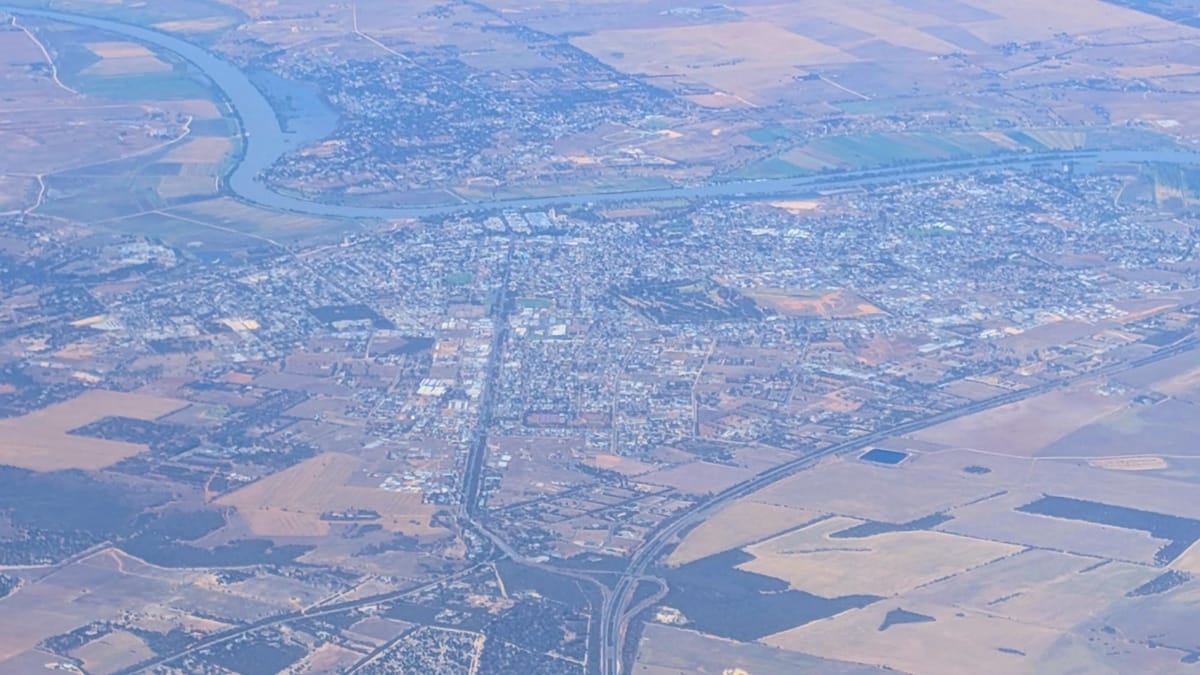
Murray Bridge is growing faster than ever and will soon become the biggest city in regional South Australia, according to the latest state government projections.
The Murray Mallee Regional Plan, released on Monday, forecasts that Murray Bridge will overtake Whyalla and Mount Gambier by growing its population to around 35,000 over the next 15 years.
That’s on the high end of previous forecasts, and suggests 12,500 new residents are on their way.
Mannum and Tailem Bend can also expect population growth – 1600 and 500 new residents, respectively – on the back of job creation in the tourism, renewable energy, agriculture and transport industries.
Building on local council plans, the regional plan sets out where houses and businesses will go, which areas need to be protected from sprawl and what infrastructure will be needed.
State Planning Minister Nick Champion said the plan, and five others like it, pointed the way towards a strong future for regional SA.
“South Australians in regional communities can be assured that the future of where they live is being backed by a government with a plan for sensible growth,” he said.
“I am grateful to the local councils and community members that have shaped these plans, ensuring what is in the plans reflects what each region needs.”
Where will all the houses go?
There was plenty of extra room for housing in the Murraylands, the plan said, including at Gifford Hill.
However, the rate of housing construction would need to triple or quadruple from the recent rate of 87 new homes per year in the Murray Bridge district.
The types of housing being built would also need to change to better suit single workers and retirees.
At the last census, about a third of Murray Bridge households consisted of one person, but more than 80 per cent of local houses had three or more bedrooms.
More units and affordable housing will be needed to meet local needs.
The plan also acknowledged that under-utilisation of vacant homes was a problem, especially in shack areas.
On the bright side, most towns already had enough residential land to accommodate the new homes that would need to be built.
There were more than 400 vacant blocks in the Coorong district, and the local council was already planning to subdivide more, even through the forecast was for just 250 extra homes by 2041.
Murray Bridge already had capacity to add 8000 more houses, and more than 23,000 over the long term, though more residential land was needed at Mypolonga.
In the Mid Murray, almost 900 homes would be needed, so more subdivisions would have to be developed to add to the 380 blocks currently available.
What else does the plan tell us?
The region’s most important employment land was at Pallamana, the plan said, where more industrial development could be encouraged around Thomas Foods International.
The plan sets out specific, common-sense objectives for continued growth in town centres and retail, tourism, primary industries, waste management and mining.
A whole separate section plans for growth in transport, noting the region’s proximity to the eastern states and the upcoming Swanport Bridge duplication and Monarto freight bypass.
It also has goals for protecting biodiversity and the River Murray, and adapting to climate change.
More planning work will be undertaken across the region over the next five years, including:
- Social infrastructure benchmarks, indicating the need for new schools, health services, parks, emergency services and social housing in growth areas – later in 2026
- An updated Mid Murray growth management and housing strategy, by 2027
- A Murray Mallee water strategy, by 2029
- A structure plan for Wellington East, by 2030
- A Murray Mallee transport study, by 2030
If Murray Bridge’s growth keeps pace with projections, only Adelaide and Mount Barker would have a larger population by 2041, while Gawler’s would be roughly the same.
Both other satellite cities are within the boundaries of Greater Adelaide for the state government’s purposes, while Murray Bridge is uniquely positioned between the Greater Adelaide and Murray Mallee regions.
- Read more: Murray Bridge could accommodate 8000 homes in 30 years: report
- Read more: New R-12 school, main street changes and more planned in Murray Bridge