Indigenous health seminar derailed by anti-Voice activists
Ngarrindjeri elders say a Voice to Parliament would help to close the gap, but commenters at a public meeting in Murray Bridge have expressed their fears.
Locals support locals – that’s why this post about the upcoming referendum is free to read. Your support helps Murray Bridge News tell important local stories. Subscribe today.
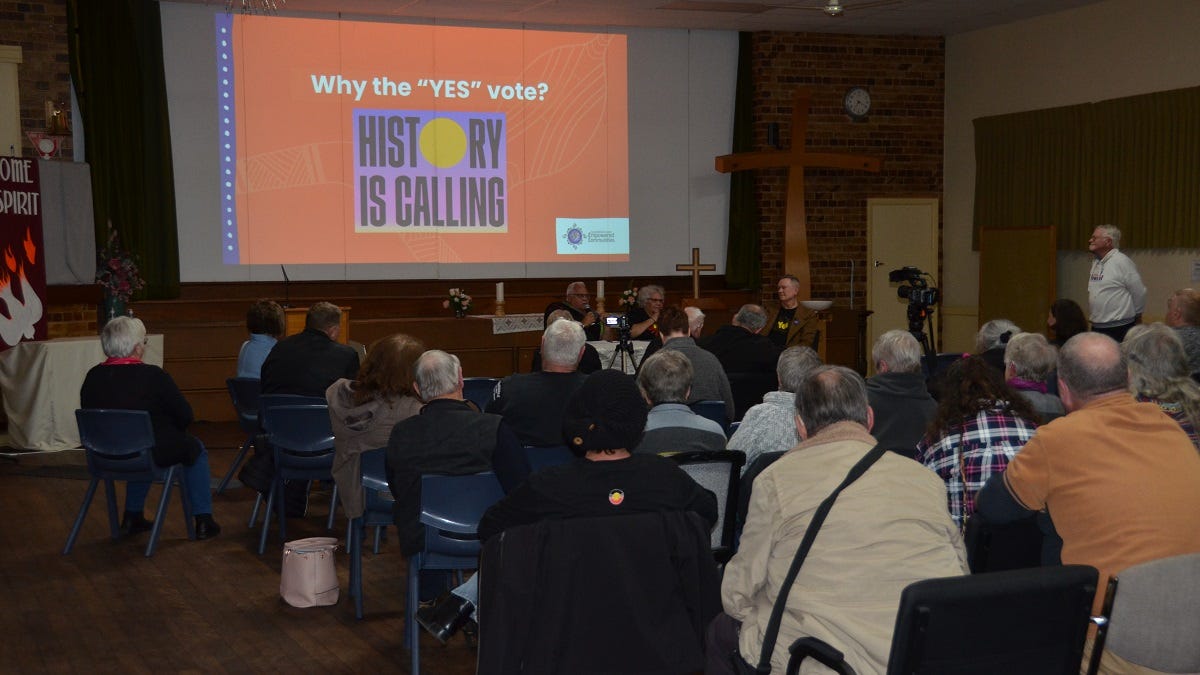
An Indigenous health seminar in Murray Bridge has become a tense meeting about the forthcoming Voice referendum.
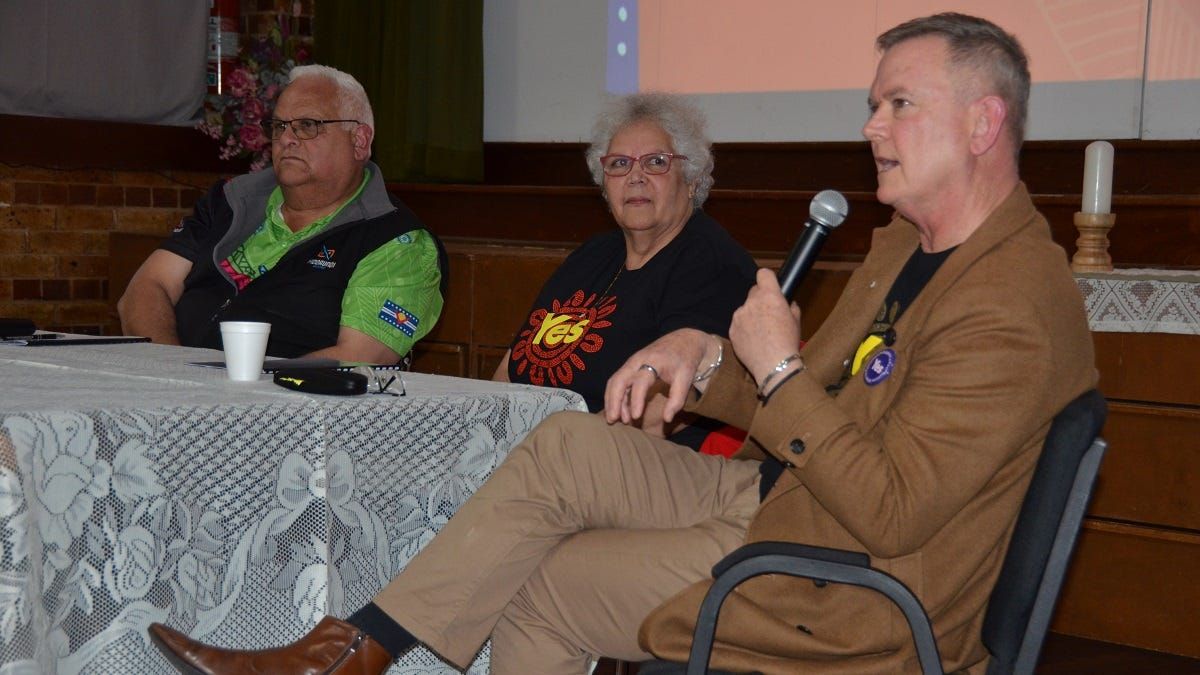
The Wednesday evening event was chaired by Annette Korzeba and featured two Ngarrindjeri elders and siblings – Moorundi health service CEO Steven Sumner and award-winning health sector worker Eunice Aston – plus Ross Womersley, CEO of the SA Council of Social Service.
Mr Sumner described Wednesday night’s seminar as “tough”.
“It weighs us down fighting these battles day in and day out,” he said.
All three panel members were in favour of a “yes” vote at the upcoming referendum.
But Mr Sumner said it was important to convince people to understand Indigenous perspectives, rather than pushing anyone to vote against their wishes.
Locals support locals. Your support helps Murray Bridge News tell important local stories.
“(We need) to give you the understanding … to give you the information from our perspective and get you to make the decision yourselves,” he said.
He argued that historical legislation, such as Australia’s 1901 constitution, had removed First Nations peoples’ rights.
Rather than dividing the nation, as federal MP Tony Pasin and others had suggested, an Indigenous Voice would work against legal divisions which had been in place for more than a century.
“In 1901, we were already divided by race and colour … they excluded us from the constitution,” he said.
Prior to 1967, the constitution gave Australia’s parliament the power to make laws about “the people of any race, other than the Aboriginal race, in any state, for whom it is deemed necessary to make special laws”.
Ms Aston said such legislation had affected First Nations people’s health and life expectancy outcomes in the past, and still did today.
“Because of past policies, First Nations people have failed to close the gap,” she said.
“I watched my dad die at 53 from diet, of all things; because our diet changed so much, our people died really early.”
Ms Aston said doctors had given her only an hour to live after she was born, due to lung problems; she had also survived a recent bout of cancer and reached the age of 64.
“I refuse to go anywhere else until I’ve changed the world,” she said.
Mr Sumner agreed that past government policies continued to prevent the gap being closed between First Nations and non-Indigenous people.
“We’re still living these atrocities and living the trauma of it,” he said.
“The politicians in 1901 had already separated Australians; now we have the chance to get it right as as a country and people.”
Ms Aston said getting a Voice established would ensure a permanent advisory body that wouldn’t be at risk of disappearing as different political parties came into power.
“If we get the ‘yes’ vote, I can’t see that this could be struck away with a pen,” she said.
Q&A session tests panel members’ patience
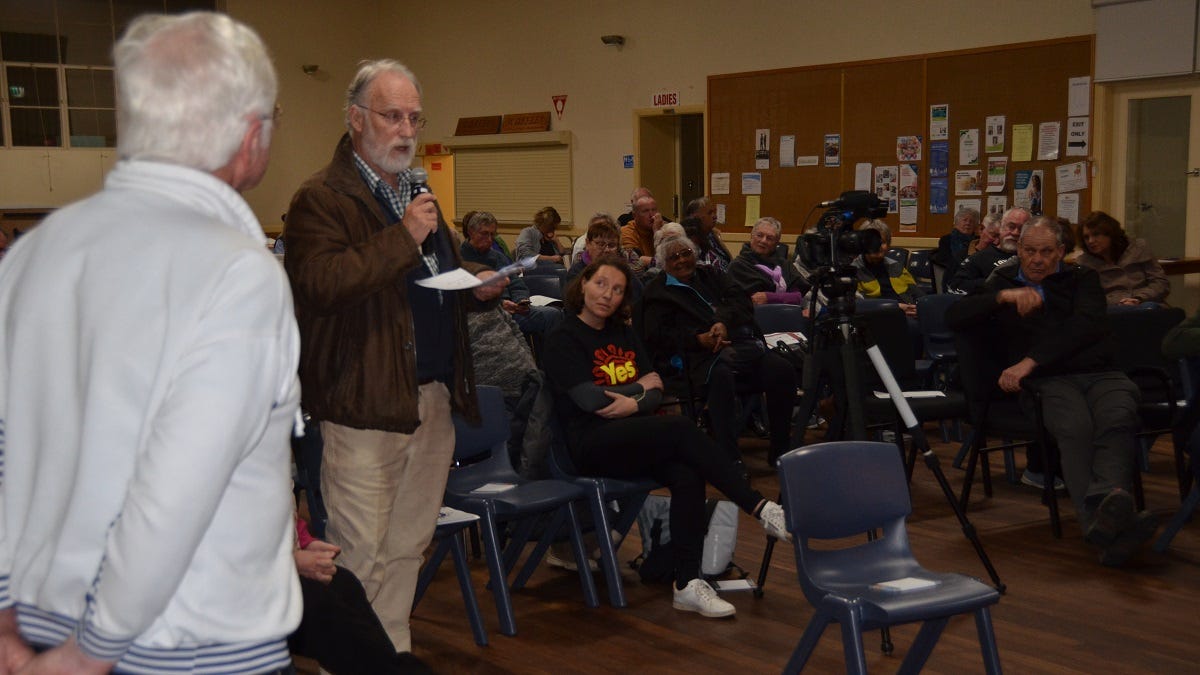
Mr Sumner and Ms Aston remained patient and diplomatic throughout a question-and-answer session at the seminar, in which audience members were light on questions and heavy on comments.
Mistrust of the government was a common theme.
One audience member, Gary, said he was worried about a treaty between First Nations people and non-Indigenous people because he didn’t trust that the government would do the right thing.
“Let’s between us make one flag, one people, because I’m not so worried the Voice is going to divide us,” he said.
“But I don’t trust the government … I don’t want Australia to become a communist.”
Another audience member, Alan Gray, who recently spoke at a council meeting about his fears of 5G technology, argued that the government was trying to divide the nation.
“The government is not being straight to us,” he said.
“The government are trying to divide us by getting us to fight each other.
“They are using you (Indigenous people) to make us (non-Indigenous people) do something that is not good for us, and I don’t think it’s good for you.”
Another audience member, John, read from a 26-page report for around 15 minutes.
He expressed concern about the financial implications of establishing a Voice, but other audience members expressed their irritation that he wasn’t asking an actual question.
A woman in the audience, Karen, stated her fear that the Voice could damage the Australian economy if “millions of dollars” were handed over to Indigenous people.
“It’s going to have a huge impact on the economy if it’s going to be nationwide,” she said.
“It’s going to corrupt the country if it’s the same in each state.”
Ironically, for a seminar which focused on the Voice, some audience members made it difficult for the panellists’ voices to be heard.
However, Mr Sumner remained diplomatic, saying that everyone should be allowed to speak.
He admitted that he, too, didn’t trust the government, and that lots of money that had been meant to go to First Nations people to close the gap had been whittled down considerably before reaching its target.
Still, he said he believed in the Voice as a stable instrument for advising governments on ways to improve conditions for First Nations people.
“The Voice will be there whether it’s the Labor Party, the Liberal Party or the Heckle and Jekyll Party,” he said.
“We’re not interested in your land – what we need is a voice in parliament for issues that affect us.”
- Read more: What is the First Nations Voice, and why is it important? Two Ngarrindjeri elders explain
- More information about the Voice proposal: voice.niaa.gov.au.