Here’s what you need to know about inflammatory bowel disease
Murray Bridge woman Shae Lehmann hopes to help others by sharing her experience this Crohn’s and Colitis Awareness Month.

This story is free to read. Help Murray Bridge News tell more stories like this by subscribing today.
Like so many women, Shae Lehmann knew there was something wrong, but it took her an awfully long time to find out exactly what.
She had been experiencing abdominal pain, nausea, a loss of appetite and heavy fatigue.
The pain got so bad that she was admitted to hospital: “I couldn’t sleep, I couldn’t stand a certain way without it hurting.”
She was asked to undergo to test after test.
“(They thought) it was my gall bladder at one stage, it was something else, it was just ‘keep coming back if the pain gets worse’ and it kept coming back,” she said.
“It was IBS … I got ‘UTI’, it wasn’t that; and then, being a lady, ‘Are you pregnant?’”
Finally, an MRI showed inflammation in her bowel, leading to an accurate diagnosis at last.
It was Crohn’s disease.
The disease can cause redness, swelling and pain anywhere in the digestive system, but usually in the bowel, in response to injury or irritation.
It can even narrow the bowel, causing obstructions; create holes called fistulas; or lead to abscesses forming.
It is one of several conditions Ms Lehmann and other sufferers around Australia are highlighting this month: Crohn’s and Colitis Awareness Month.
Nearly 180,000 Australians live with inflammatory bowel disease, according to Crohn’s and Colitis Australia, but more than a third of them experienced symptoms for more than a year before getting a diagnosis.
People living with IBD are likely to need more frequent hospital visits than those with cancer, heart disease or dementia, according to CCA.
CEO Leanne Raven encouraged all Australians to familiarise themselves with the symptoms of inflammatory bowel disease.
“The cost of delay is real, from physical harm and emotional strain to impacts on school, work and family life,” she said.
“Raising awareness and encouraging Australians to listen to their bodies and seek answers sooner can be life-changing.”

Ms Lehmann’s diagnosis was several years ago now and, after two surgeries and a prescription for the right medication, she has got her life back on track.
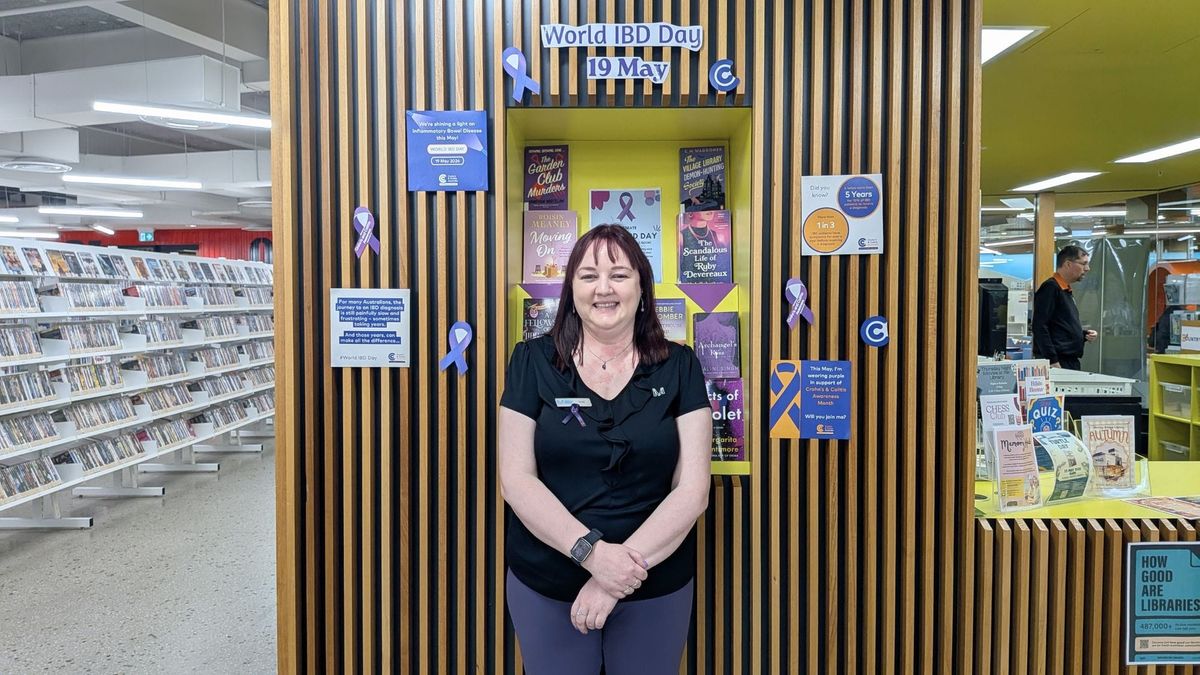
She set up a display at her workplace – Murray Bridge Library – with information about inflammatory bowel disease, and planned to wear purple on Tuesday: World IBD Day.
More support was needed in regional South Australia for sufferers of not just inflammatory bowel disease, but all chronic diseases, she suggested.
There was still a lot the general public could learn about Crohn’s disease, colitis and similar conditions, too.
But even a life-long illness didn’t have to mean ongoing suffering.
“You can still live healthily (with IBD),” she said.
“You can go off (medication) at a point when you reach remission, when your symptoms aren’t active; but you’ve got to manage stress and try and find what the triggers are for you.”
- Check your symptoms: crohnsandcolitis.org.au/symptom-checker.
- More information: gutsmart.com.au.