What is endometriosis, and how can you treat it?
Murray Bridge Medical Centre’s Dr Amber Salman explains. Plus, the latest on this winter’s flu vaccines, and a new nasal spray for kids.


This sponsored story is brought to you by Murray Bridge Medical Centre.
March is Endometriosis Awareness Month, a time to increase your understanding of an often misunderstood condition.
Endometriosis is a painful hereditary condition affecting women mostly aged in their teens, 20s and 30s, says Murray Bridge Medical Centre GP Aumbreen “Amber” Salman.
It is caused when the body mistakenly begins growing tissue from the uterus elsewhere in the body, including the ovaries, fallopian tubes, gut, urinary tract or abdominal wall.
“Basically what happens is the normal inner uterine lining, the endometrium – that’s the part that grows during the menstrual cycle and gets shed off when your period bleeding (happens) – that grows outside the uterus, in multiple places in the body,” Dr Amber says.
Patients typically experience pain, abdominal cramps and/or discomfort around the pelvis.
Endo might also cause heavy or irregular period bleeding, and potentially infertility, among a range of other issues.
To reach a diagnosis, your GP may recommend a laparoscopy: keyhole surgery which allows a gynaecologist or another specialist to visually assess the area where a patient is experiencing pain.
“The good news is, particularly in younger age groups, like teens, we don’t go for those invasive investigations if we have a strong suspicion it’s endometriosis,” Dr Amber says.
“Usually on a trial basis, particularly for younger females and teens, we can try putting them on the (contraceptive) pill.
“There are new pills which are approved for endometriosis which actually provide relief with the symptoms.”

Allied health professionals including physiotherapists and psychologists can help patients manage their symptoms.
If infertility is not a concern, a hormonal inter-uterine device such as a Mirena may be an option – in most cases “it does help massively”.
If symptoms persist, surgical removal of any problematic tissue is also a possibility.
Public understanding of endometriosis is growing in Australia, but many women still experience a years-long delay before they are able to get a diagnosis, according to Endometriosis Australia.
That’s something the GPs at Murray Bridge Medical Centre with an interest in women’s health – Dr Amber, Dr Anu Jagathesan, Dr Qun “Ellen” Liu and Dr Taslima Akther – hope to improve upon.
If you’re experiencing symptoms like those listed above, it might be worth having a conversation with one of them, or your regular GP.
- More information: Visit endometriosisaustralia.org/understanding-endometriosis.
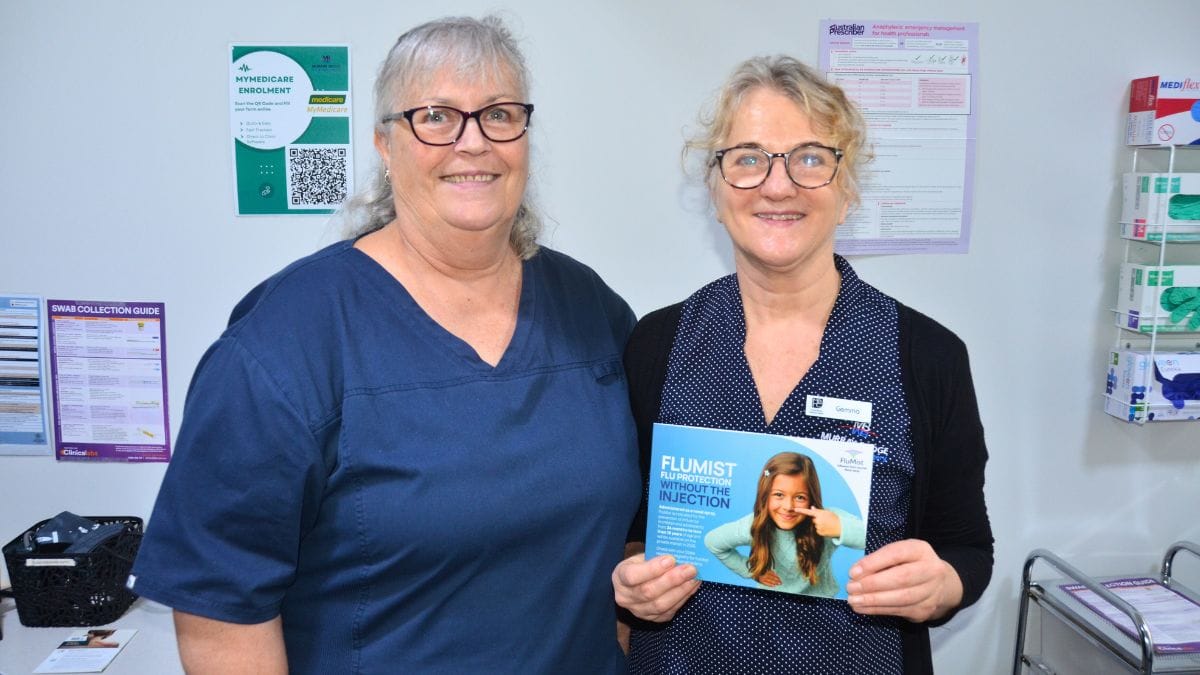
Flu vaccines – and nasal spray – will be available soon
In the meantime, the team at Murray Bridge Medical Centre want you to know that this season’s flu vaccines will be available soon.
Government-funded vaccines for locals aged over 65 should become available as early as next week, while doses for other patients will be ready after Easter.
A new, needle-free form of immunisation will soon become available to children aged two to 18, too.
Flumist is a nasal spray which will be available for purchase this year, either at GP clinics or – with a prescription – from pharmacies.
The product, available in Europe for more than a decade but newly adapted to Australian flu strains, provides up to 12 months of protection.
Getting immunised and maintaining good hygiene will help you protect your health throughout the year, practice manager Wendy Ziersch says.
“Influenza can be quite serious,” she says.
“We need people to go back to the basics of washing hands, using hand sanitiser and not going out if you feel unwell.”
She encourages businesses to return to the practice of making hand sanitiser available.
- Make an appointment: Visit Murray Bridge Medical Centre at 35-37 Adelaide Road between 8am and 5pm on weekdays, call 8531 2988 or visit www.murraybridgemedical.com.au.
Advertising to more than 20,000 highly engaged locals can do wonders for your business. Call Jane Intini on 0418 835 768 or email jane@murraybridge.news.
 Peri Strathearn