Palmer Sculpture Biennial showcases ‘natural magic’
The 2026 biennial has opened with a welcome ceremony and musical performances, and will continue until April 12.

This story is now free to read. Help Murray Bridge News tell more stories like this by subscribing today.
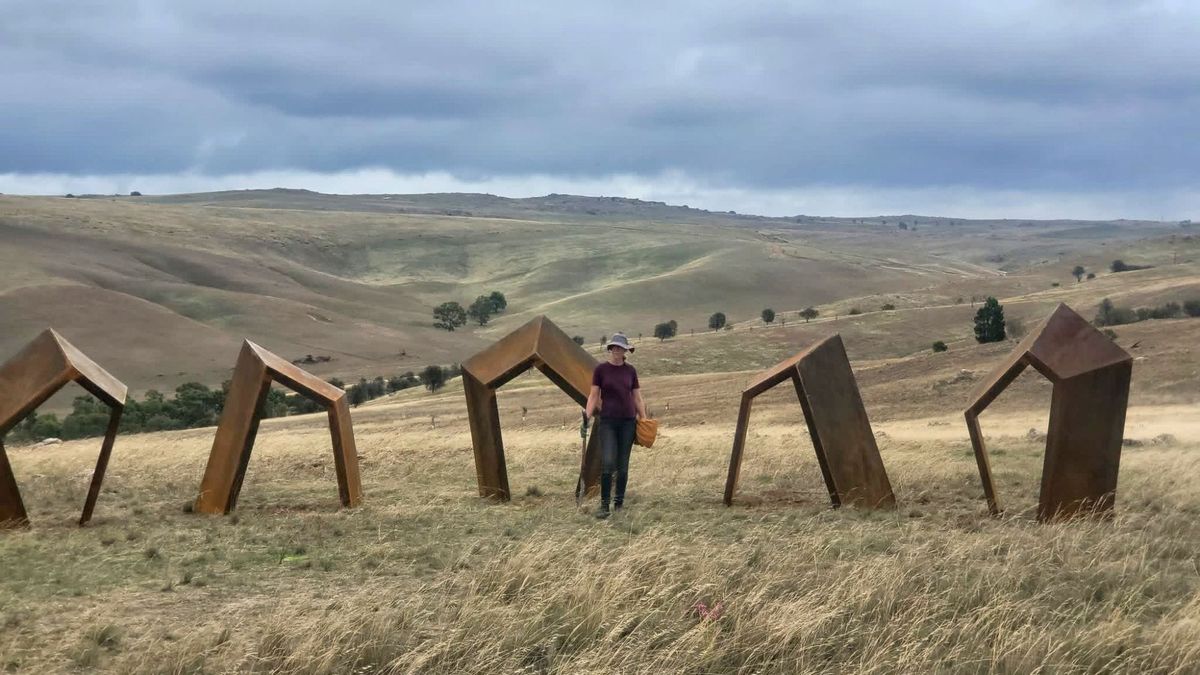
After two years of preparation, the 12th Palmer Sculpture Biennial has attracted visitors from across Australia and overseas to the area’s rugged, windswept landscapes, which were bathed in brilliant sunshine for an official opening on March 14.
Around 250 people attended.
Greg Johns, co-curator and founder of the biennial, as well as an internationally recognised sculptor and artistic visionary, described it as “natural magic all round – magic that AI cannot replicate”.
The exhibition brings together 30 artists, featuring major works by sculptors from South Australia, Victoria and Western Australia alongside artists from England, Switzerland, Germany and the Netherlands.
South Australian cultural advocate Greg Mackie OAM praised the biennial’s significance, highlighting the spiritual and philosophical dimensions of sculpture.
“Sculpture is a parable in three dimensions, a symbol of spiritual experience and a way of conveying truth in visible form,” he said.
“Greg Johns is one of those rare artists able to sustain their existence and vision purely through their art, dreaming and acting bigger than self-interest.”
Co-coordinator Bill Clifford emphasised the growth of the biennial over the years.
“Our first biennial in 2004 had nine works,” he said.
“This year we have 28 works by 30 artists – the largest number in our history.
“Perhaps it shows a renewed engagement with art of substance and significance in a world where meaning is often displaced by popular clichés and banality.”
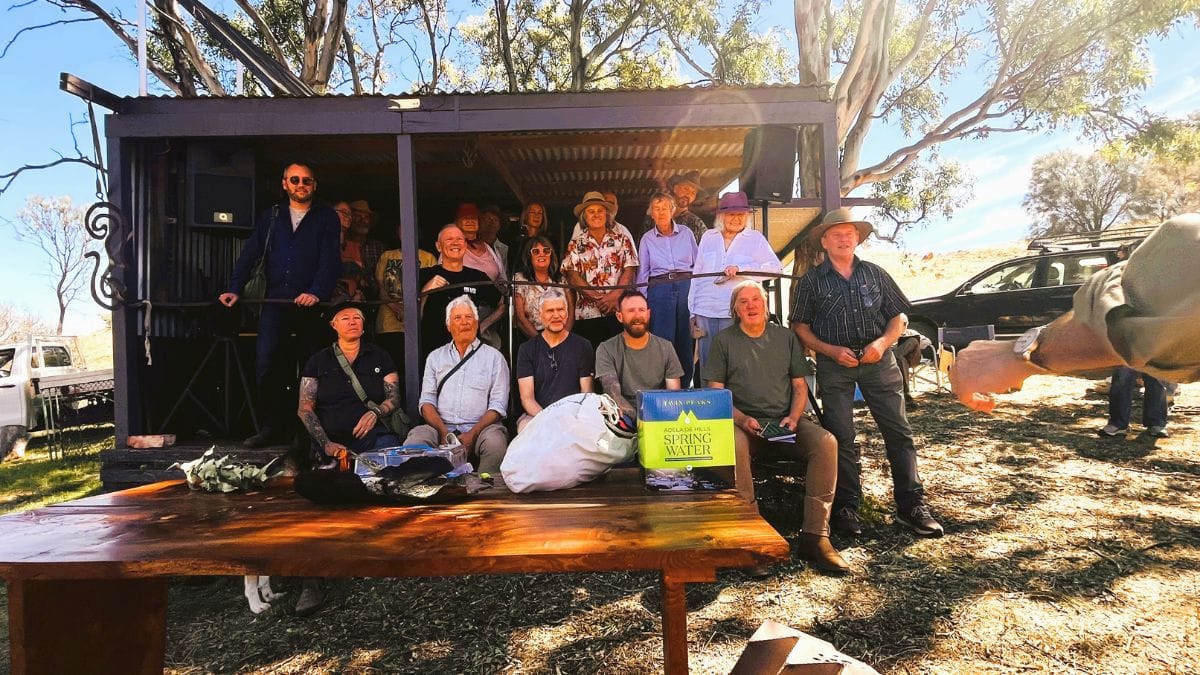
The biennial also showcases environmental and community projects.
Helen Taylor spoke about Leif’s Valley, a habitat restoration project and living memorial to her late son, climate activist Leif Justham, who tragically died in 2021 while cycling across the Nullarbor to raise awareness about fossil-fuel divestment.
“Leif’s story and legacy live on,” she said.
She encouraged visitors to participate in ongoing restoration work.
“Action is the antidote to despair,” she said.
“Get your hands grubby planting native flora – trees, shrubs and grasses – and help restore ecosystems for future generations.”
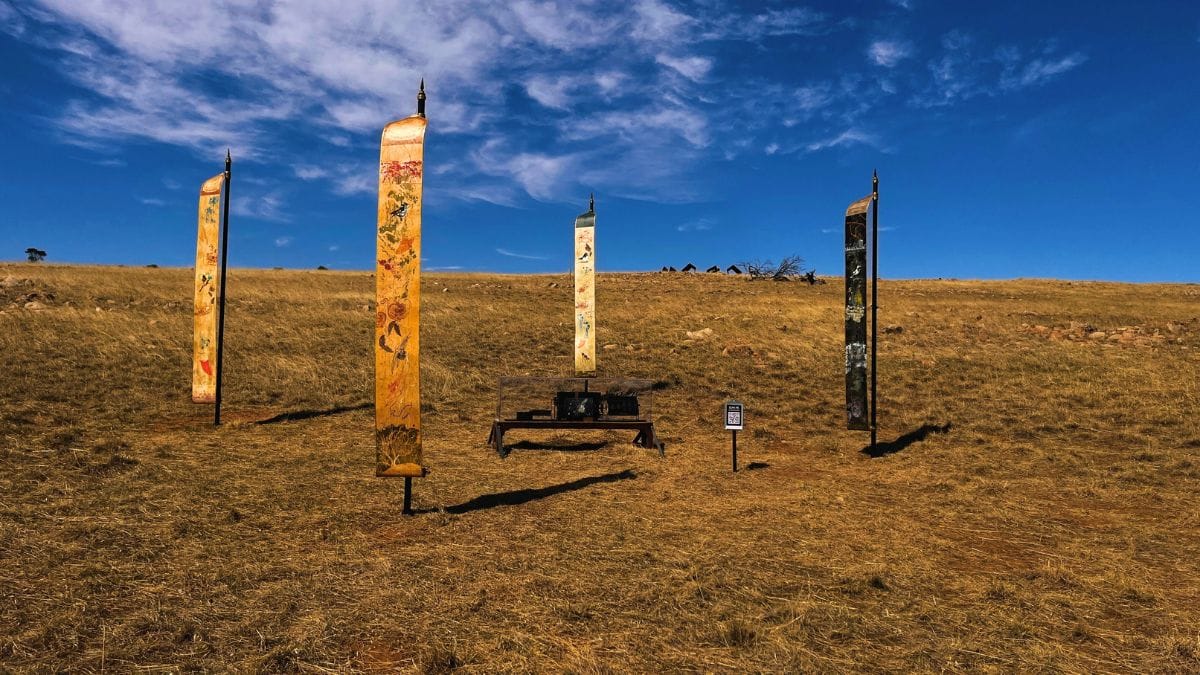
Among the featured works, Adelaide Hills artist Liz Butler and John Woolford, based at Crafers West, present Sentinels of Season, a sculptural installation made from steel, brass and paper.
The work features four sail-like structures incorporating pianola-inspired elements.
Butler said the idea for the piece had begun two years ago when a friend gave her the internal mechanism of an old pianola, which sparked the concept for the installation.
“Here in Palmer, listening to the wind sweeping over the rolling hills, I imagined transforming its movement – and the rhythms of the pianola – into a visual capturing the cycles of time and the passing seasons,” she said.
“Two years later, that vision has come to life.”
The four scroll-like elements integrated into the sails were based on original pianola scrolls, which Butler silkscreened and hand-painted.
Visitors can also scan a QR code at the site to hear the music, adding an auditory layer to the visual experience.
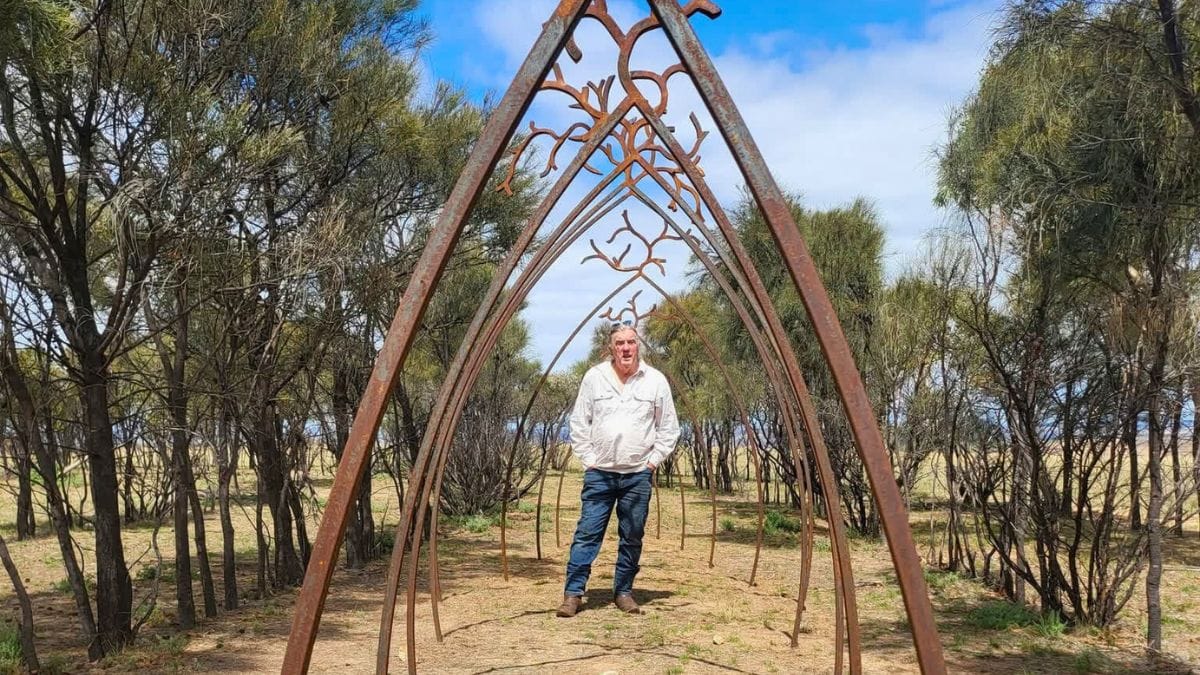
Greg Johns’ The Cathedral of Trees features Gothic-inspired arches set among young red gum eucalypts, inviting visitors to walk beneath the structure.
Over time, the growing trees will rise beyond its walls and ceiling, symbolising a lasting union between human creation and nature.
When asked whether there would be an entrance fee to the landscape in the future, he laughed: “No – we are not running a business here.”
Johns bought the 400-acre Palmer property in 2001 with a vision beyond art.
He has spent more than two decades restoring native vegetation and wildlife, creating a living landscape where contemporary sculpture, the Australian environment, and the traditions of the Peramangk custodians coexist.
The project celebrates both the land and its cultural history while inviting visitors to experience art in harmony with nature.
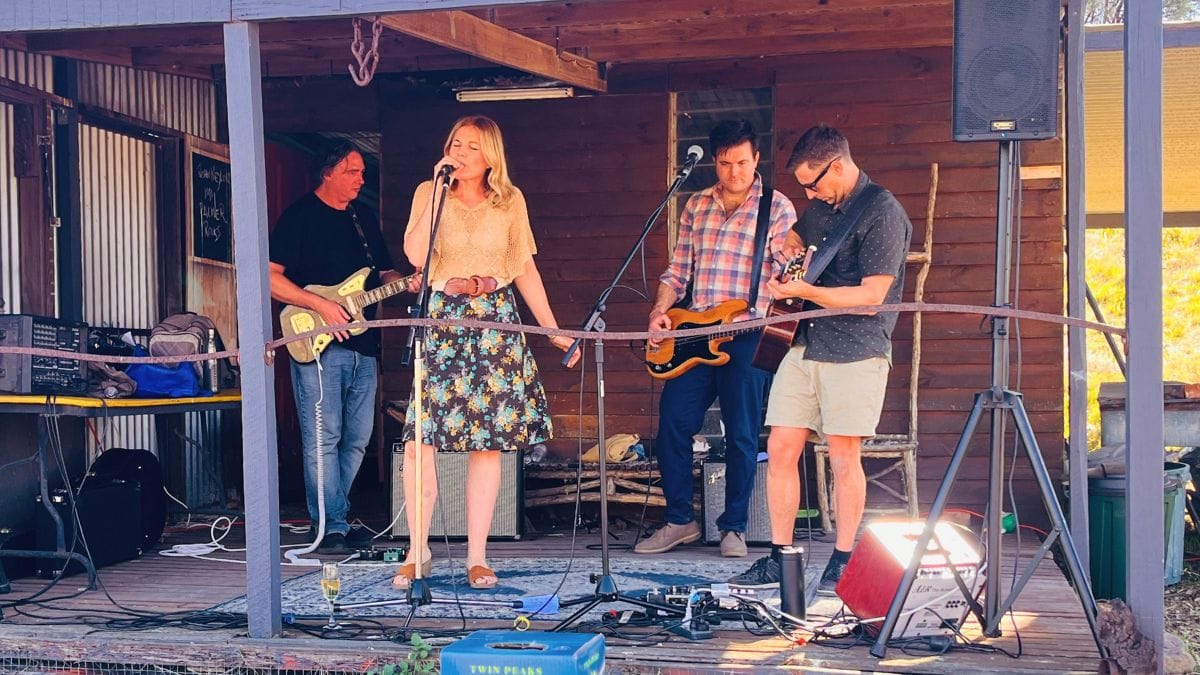
The opening was complemented by live music performances from Jen Lush and her band, Lucas Keeley, and the Yearlings, creating a rich, multi-sensory experience for attendees.
It also featured a welcome to country and smoking ceremony led by Peramangk custodians Courtney Hunter-Hebberman and her mother Mandy Brown, highlighting the deep cultural connection between people and country.
Four generations of the Hunter family attended, underscoring the living continuity of Peramangk culture.
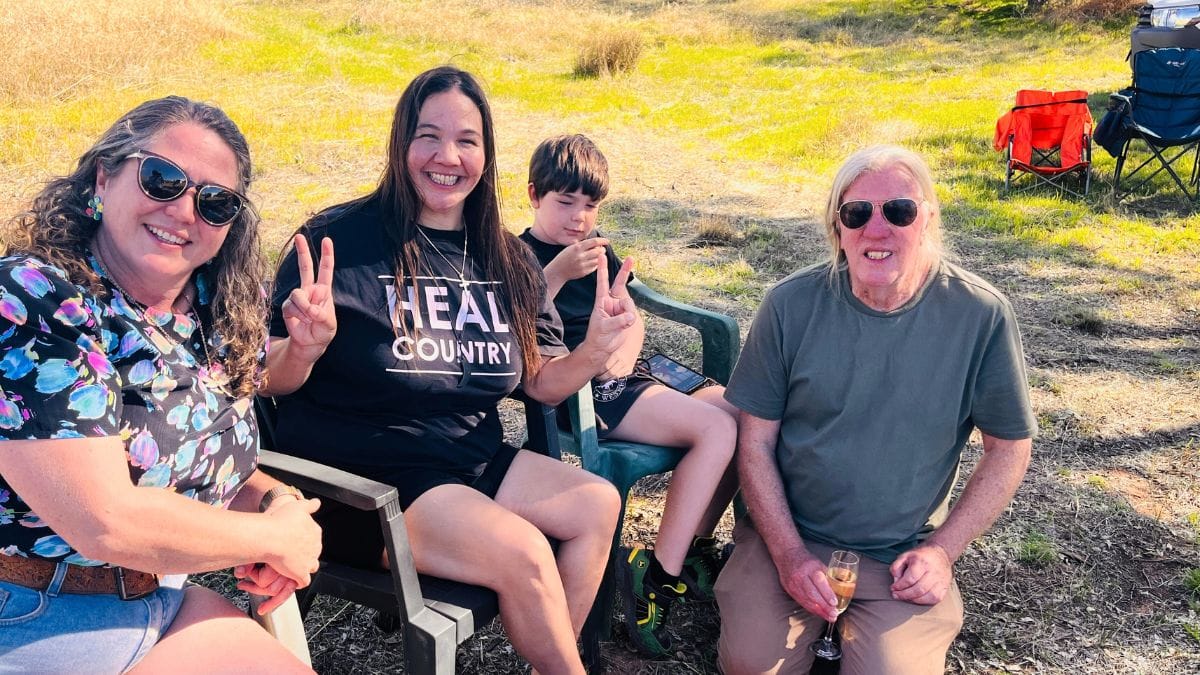
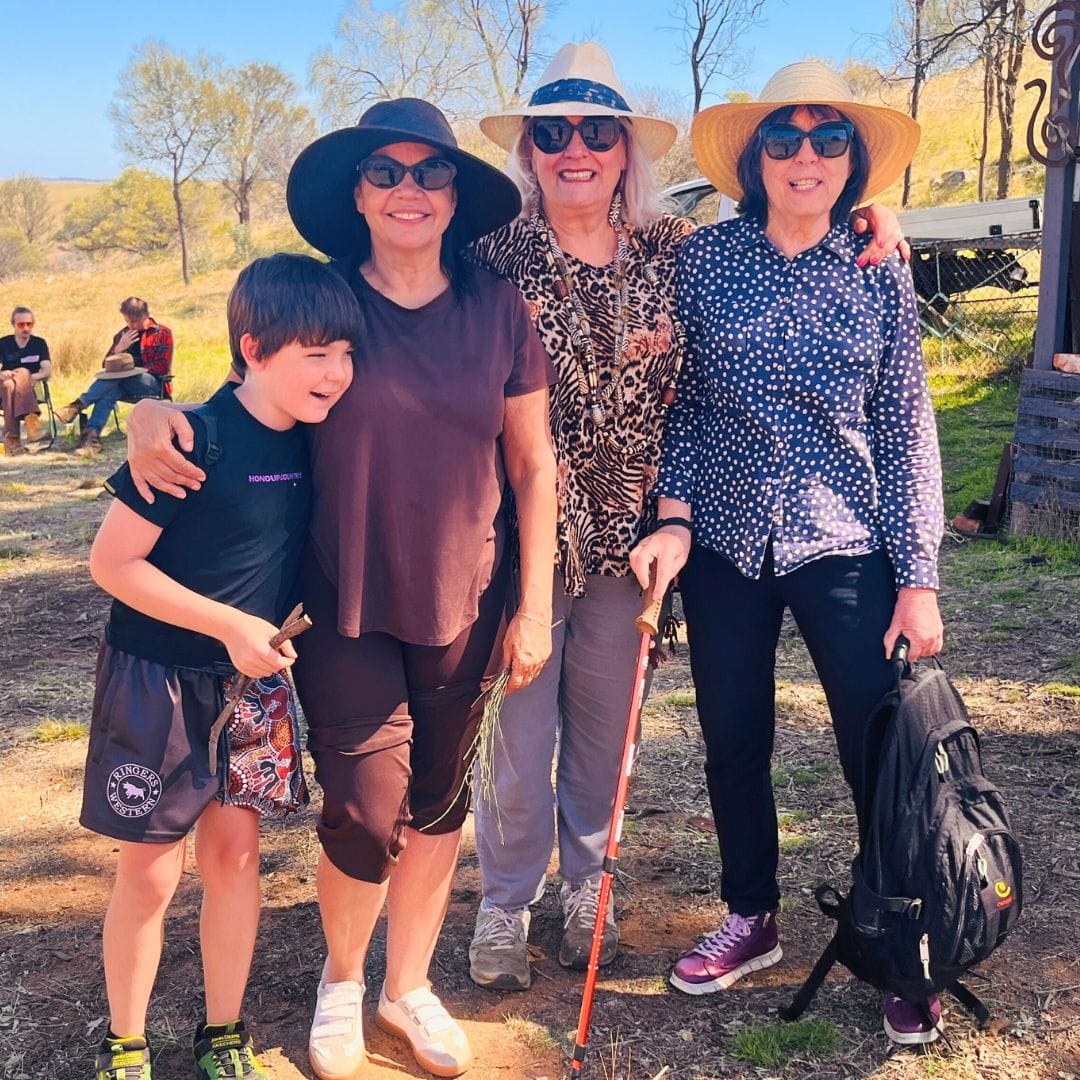
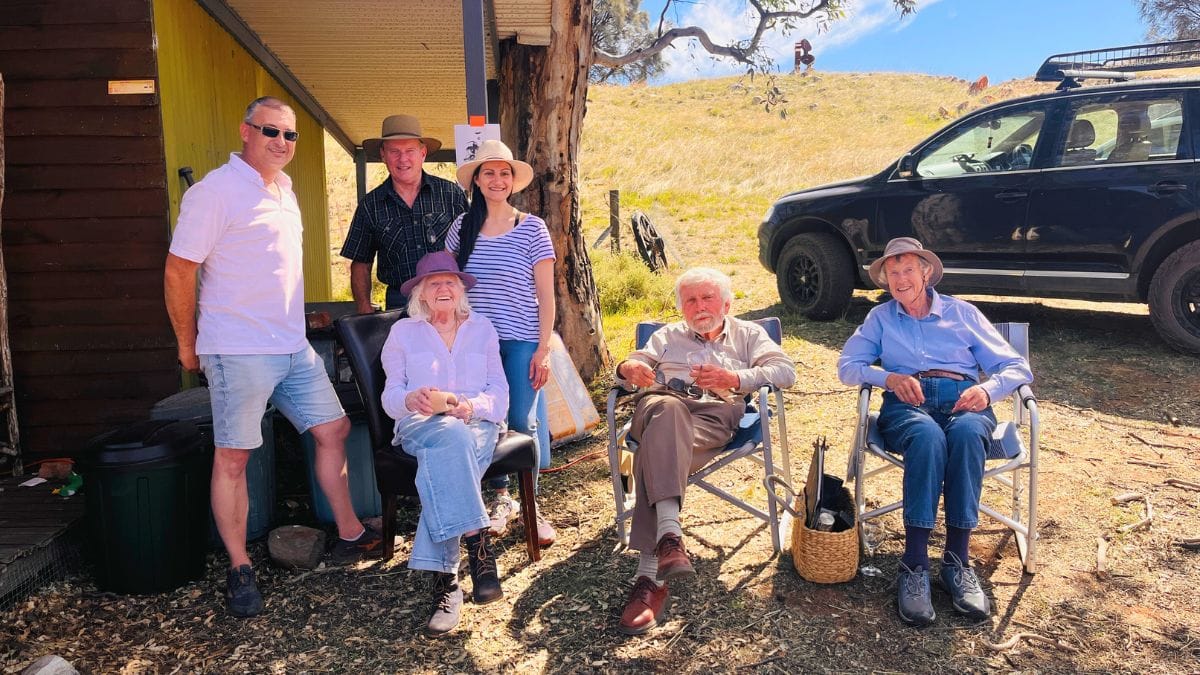
At the opening are Victoria Hammond, Courtney Hunter-Hebberman, young Ashton and Greg Johns; Ashton, Mandy Brown and two friends; and John Woolford, Liz Butler, Bill and Jan Clifford and friends. Photos: Zhen Pu.
“The smoking will clear the space and give consent for the activities happening here on country,” Ms Hunter-Hebberman said, underlining the spiritual and ceremonial significance of the ritual.
Ms Brown described “country” as far more than land or waters: “We belong to country and country belongs to us.”
“Welcoming you to country means welcoming you to us and our culture, so that we can all belong together.”
Although the Adelaide Fringe has now finished, the biennial will remain open from 2-5.30pm on Wednesdays and 11am-5.30pm on weekends until Sunday 12 April.
The Palmer Sculpture Landscape is located 3.5 kilometres from Palmer on Davenport Road, which starts opposite the hotel.
- More information: Contact Greg Johns at gjoh4899@bigpond.net.au or Bill Clifford at billclif@outlook.com, or visit www.palmersculpturebiennial.org.