Green space will be paramount at Gifford Hill, developer says
Exclusive: James Dibble has explained his vision for a major residential development at a business breakfast hosted by Murray Bridge News.

This story is now free to read. Help Murray Bridge News tell more stories like this by subscribing today.
Can good design improve the lives of the people who live in a neighbourhood?
James Dibble thinks so, and he’s willing to bet everything he’s got on the idea.
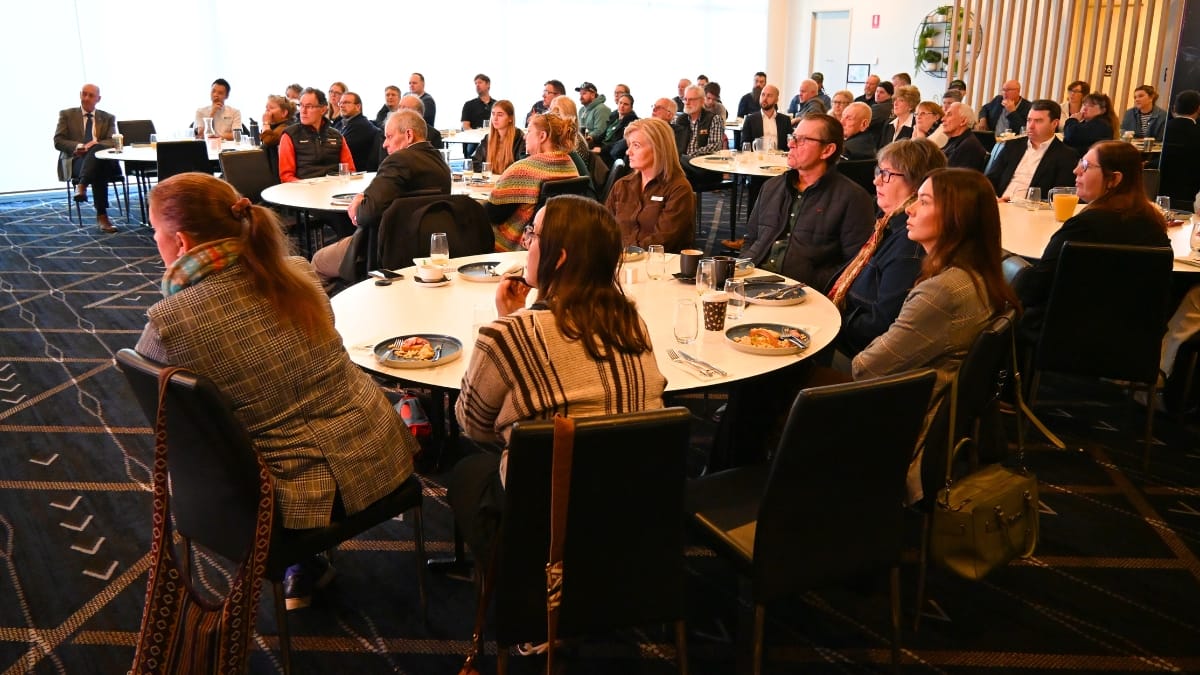
That was the impression left by the Gifford Hill developer at a breakfast event hosted by Murray Bridge News on Wednesday.
About 60 people came to the Bridgeport Hotel to hear Mr Dibble, the managing director of Grange Development, explain his vision for one of the biggest residential developments in South Australia’s history.
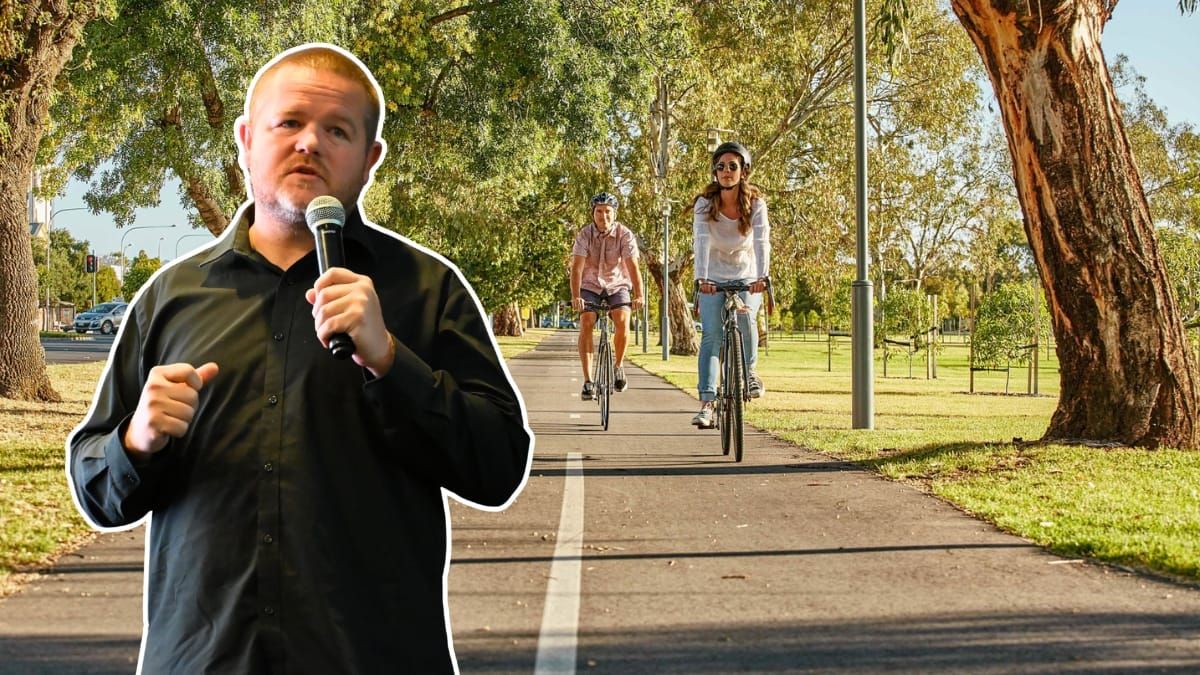
Most exciting to him was the 37-kilometre network of walking, cycling and horse-riding trails that would eventually criss-cross the area.
Gifford Hill was not just about building houses – it would be about creating communities where people could walk to school or the shops and keep their cars in the garage.
“I went to the US and went to a whole bunch of places around the world to find out what the best practice was for … interconnecting a city without getting in a car,” he said.
“Ultimately (trails) will connect up all the schools, all the town centres, all the sports and rec precincts and everything else.”
Four years after buying land at Gifford Hill and two years after announcing the project, there had been major regulatory hurdles to overcome, Mr Dibble said.
Of note, the developers had recently reached an in-principle agreement with SA Water about service provision.
But just as significant had been the need to get the state government’s attention, and to make it clear that the area north of Adelaide wasn’t the only region primed for growth.
He hoped to restore locals’ faith in the bright future of their own community, too.
That was fair enough – after all, Mount Barker and Gifford Hill had both been rezoned in 2010, but one had since welcomed 20,000 new residents and the other zero, under a previous developer.
“This project needs to be able to change the narrative, it needs to be able to give people hope and ambition again,” he said.
“(Murray Bridge) has got all the ingredients: it’s an hour from the big city, it’s got great lifestyle, people are lovely, (there are) more jobs than people.”
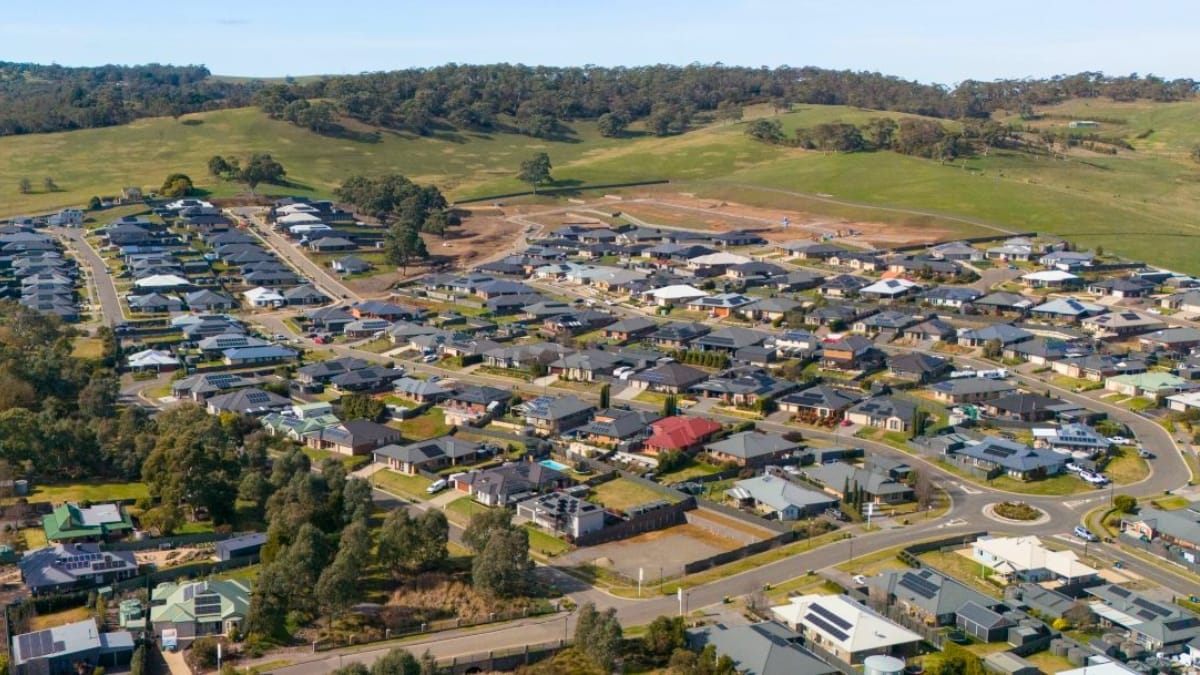
But how will Gifford Hill avoid becoming another Mount Barker?
The carefully planned nature of Gifford Hill would make it much more organised than other major growth areas in South Australia’s recent past, Mr Dibble suggested.
The new residential areas in Mount Barker were “lovely”, but that community had suffered because of:
- Topography: Hilly terrain created natural bottlenecks
- Space: The area rezoned at Mount Barker was much smaller
- Poor planning: No over-arching infrastructure plan was completed before Mount Barker began expanding
By contrast, Grange Development and the Costa Property Group had spent $750,000 on planning work before even getting the first tranche of land rezoned at Gifford Hill.
“We didn’t have to do that,” Mr Dibble said.
“We could have lodged a land division and started developing, and it wouldn’t have been a problem for 10 years.
“But 10 or 15 years down the road we’d have another Mount Barker, and ultimately I think a large portion of that would come back on me.”
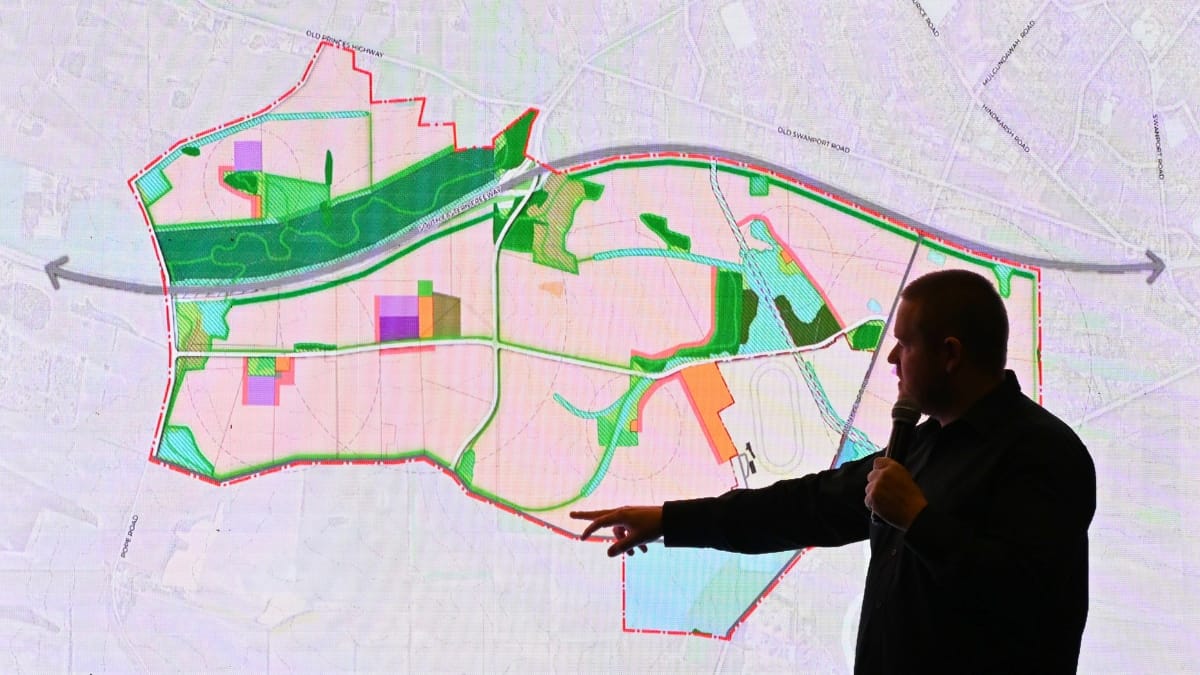
Community members asked all kinds of questions at the breakfast, on issues including:
- How to avoid a “Wok the Duck” situation: Sites for four public primary schools and two public high schools had already been mapped out, and there were plenty of possible locations for the two extra private schools the developers hoped to attract
- A new hospital for Murray Bridge: A hospital with a capacity of about 120 beds – likely a private one – could form part of the development if a proponent came forward
- The White Hill freeway interchange: It would only need upgrading when about 3000 lots had been sold, probably in 10-15 years
- Sewage: The developers had been told to and had agreed to build their own wastewater treatment plant, despite having a six-year-old government-owned facility only a few kilometres away; water would be recycled where possible
- Hotels and caravan parks: The developers would not build them – “we won’t be your competition” – but would be open to approaches from interested parties
- Local contractors: They would be used wherever possible, if they had or could develop the capacity
Would such a large development make existing residents’ council rates go up or down, one audience member asked?
Murray Bridge Mayor Wayne Thorley stepped in to answer: down.
The more properties there were in a district, the more ratepayers there would be to share the cost of local services.
Mr Dibble gently pushed back at the idea that higher rates bills were a bad thing – after all, they signified that local properties were growing in value and everyone was getting wealthier.
Business breakfast series will continue
Wednesday’s breakfast was hosted by Murray Bridge News, with support from the Rural City of Murray Bridge and Connolly Wilson Conveyancing.
Conveyancer Mel Wilson took the opportunity to speak about her business’ involvement with Catherine House, a charity which supports women experiencing homelessness; while Murray Bridge Mayor Wayne Thorley spoke about the need for the city to grow in the right way, with a clear vision for the future.
Managing editor Peri Strathearn – author of this story – touched on some of the glowing feedback Murray Bridge News had collected in a recent audience survey, and the effectiveness of advertising with local media.
Murray Bridge News intends to continue hosting business breakfasts on a quarterly basis, following on from the success of previous events with state MP Robert Roylance and Golden North director Dimi Kyriazis.