Murray Bridge innovation could revolutionise truck transport
VE Motion’s electric trailer system is saving logistics companies fuel and money, and helping the environment in the process.

This story is now free to read. Help Murray Bridge News tell more stories like this by subscribing today.
A company based in Murray Bridge has successfully demonstrated an innovative product which could help Australia’s transport industry overcome the current fuel crisis.
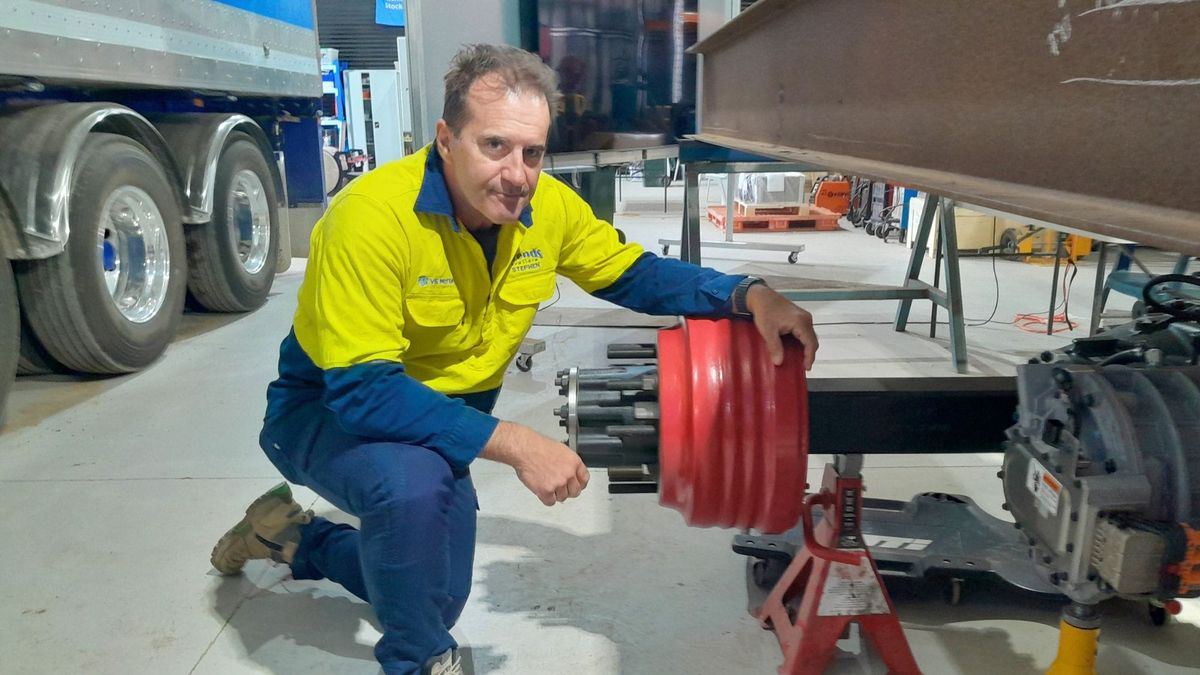
VE Motion is the producer of the nation’s first commercially available, electrically powered trailer system.
The system provides heavy transport operators with a new way to cut fuel costs, improve efficiency and boost performance, all without having to replace existing trucks.
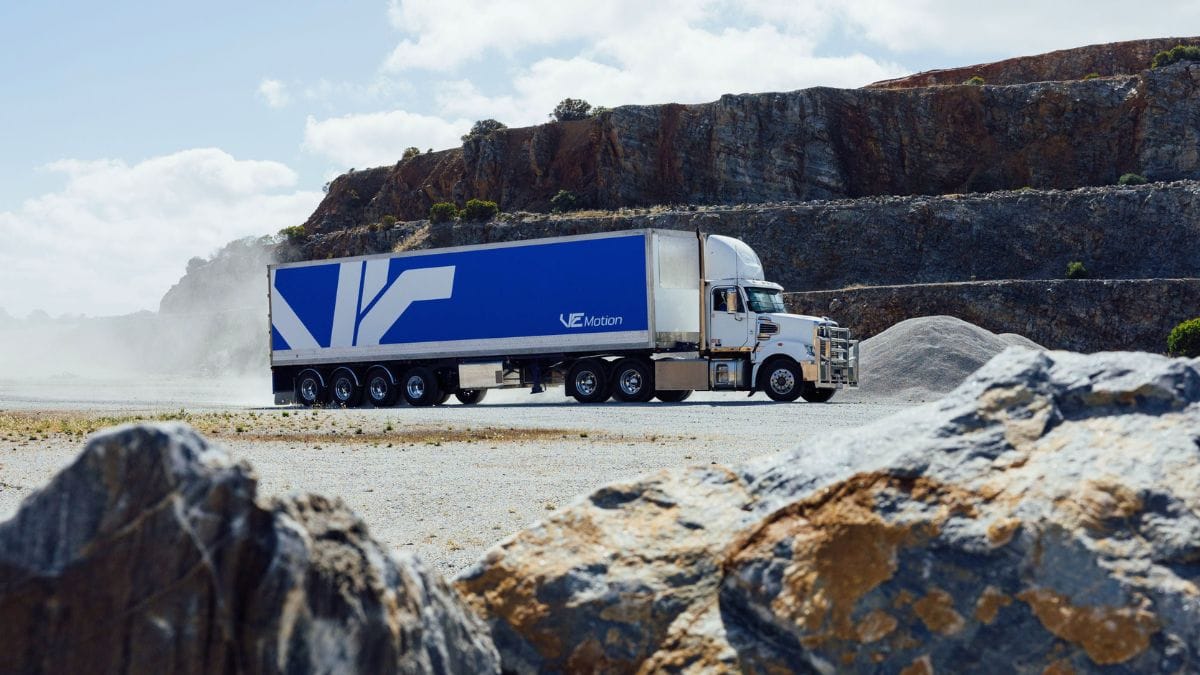
A recent product launch at a quarry at Rapid Bay had been attended by an enthusiastic group of stakeholders and future clients, VE Motion co-founder Stephen Bussenschutt said.
“We went for about five days,” he said.
"We were able to run unloaded, and then put 20 tonnes of water in and do performance tests and fuel economy tests and verify that our control systems worked.
“I’ve never seen grown men so happy.”
Although full-electric trucks already exist, the VE Motion powered trailer system only electrifies the trailer rather than the prime mover.
Amid the current uncertainty about the future costs of fuel, the hybrid system was a compelling alternative to traditional trucks, said CEO and co-founder Dean Panos.
“The problem is that full-electric trucks come with very high capital costs, added mass, range limitations and operational disruption,” he said.
“Uptake has been almost non-existent.”
In contrast, Mr Panos said, powered trailers delivered fuel savings of up to 50 per cent, more power and better efficiency, without forcing operators to replace fleets or change how they worked.
Powered trailers provide propulsion, which reduces the load on a prime mover.
In addition, a regenerative braking system captures energy that would normally get lost and stores it in a battery system, which pumps energy back into propulsion.
VE Motion has been in business for around 20 years, designing and building heavy duty trailers, along with electrified systems, so they were well placed to understand what freight operators required.
“The industry does not want disruption,” Mr Panos said.
“It wants gear that works.”
Apart from the powered trailer system reducing operating costs significantly, it also has environmental benefits, with up to 50 per cent reduction in diesel consumption and an offset of 80 to 300 tonnes of carbon emissions per vehicle per year.
The electric trailer system is available to order, but VE Motion is still calibrating its design, using the latest digital technology to gather data on performance and efficiency.
“We’re modelling this with a lady working on the actual digital modelling of dry cycles, where if someone says, ‘I want to go from A to B,’ and we get the file from Google Earth or whatever, she will model the fuel consumption and the battery usage and how long it takes to charge when it gets there or when it stops overnight,” Mr Bussenschutt said.
“But nothing’s as good as the real-world data, so we’re streaming a lot of that … and analysing the data for engineering reasons.”
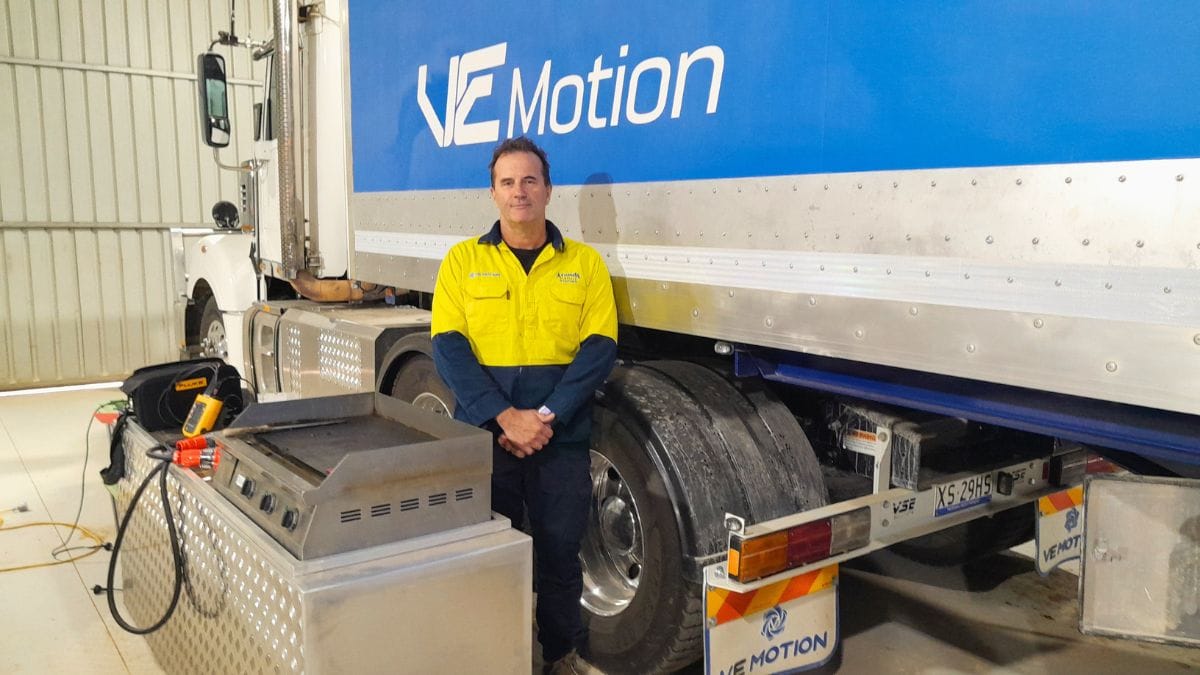
As a bonus, Mr Bussenschutt likes to use the large battery from the powered trailer to cook his steaks when working late at night in the workshop.
“We’re taking this to Truck Show X in May in the Hunter Valley,” Mr Bussenschut said.
“We’re going to sponsor the morning tea and be cooking sausages next to the truck off the battery.
“With a 100-kilowatt battery, I can run this for about 20 hours continuously.”
The powered trailer system was developed, engineered and assembled in South Australia, and VE Motion has invested more than $4 million in its development since 2008.
That investment took the system from an interesting idea to an imposing mass of blue metal travelling along a quarry in Rapid Bay.
And reducing the fuel costs of trucks will be good for all Australians’ pockets.
The federal government announced on Monday that it would reduce taxes on fuel by 26.3c per litre for three months in an effort to keep Australians on the road.
- More information: vemotion.com.au.
- Read more: Don’t panic-buy fuel amid price spike, RAA urges