The lower Murray is officially on life support – will we save it?
Three experts give an update on the health of the River Murray in South Australia.
This story was contributed by Nick Whiterod, Margaret Shanafield and Thomas Prowse, and was originally published on the Conversation.
At 2500 kilometres long, the Murray is Australia’s longest river.
It provides 3 million people with drinking water and irrigates around 1.5 million hectares of farmland.
But this intensive use has come at a cost: the Lower Murray – defined as the River Murray downstream of the Darling River and its meandering creeks and floodplains – is now dangerously environmentally degraded.
In mid-January, the Lower Murray was listed as a critically endangered ecological community under Australia’s nature laws.
This means there’s an extremely high chance its native ecosystems will become extinct within the immediate future, in as little as 10 years.
The Macquarie Marshes in northern New South Wales, one of the largest inland wetlands in south east Australia, was listed as endangered on the same day.
The health of the Lower Murray matters greatly.
It is the lifeblood for a large swathe of southern Australia and supports a diverse range of unique plants and animals, local economies and the wellbeing of people that love and rely on it.
Connecting the basin to the sea
The Lower Murray is one of a growing number of Australian ecological communities at risk of becoming extinct.
These communities include all the plants and animals co-existing in an area, in some cases for millions of years.
The Lower Murray winds through expansive floodplains, limestone gorges and swamplands as it flows 830km downstream from its junction with the Darling River to the sea near Goolwa.
The internationally recognised lower reaches of the river, including Lakes Alexandrina and Albert and the Murray estuary, connect the vast Murray-Darling Basin with the ocean.
This includes the famous Coorong, the setting of the book Storm Boy, which captured the hearts of Australians and showed us the glory of a rich wetland landscape full of abundant fish and birdlife.
Less water, less life
The Lower Murray supports a wealth of native Australian fauna.
But the development of weirs and barrages since the 20th century to regulate the water level and divert water for irrigation have dramatically altered the flow of the river.
This regulation has supported increased European settlement, trade, and agriculture along the river, setting the scene for the region as we know it today.
Nowadays, inflow to the Lower Lakes is about half of what it once was prior to European settlement.
In those days, the river experienced flows the plants and animals needed, which connected floodplains to the river and flushed the whole Murray-Darling Basin.
However, river regulation has drastically altered the water flow and ecology of the Lower Murray.
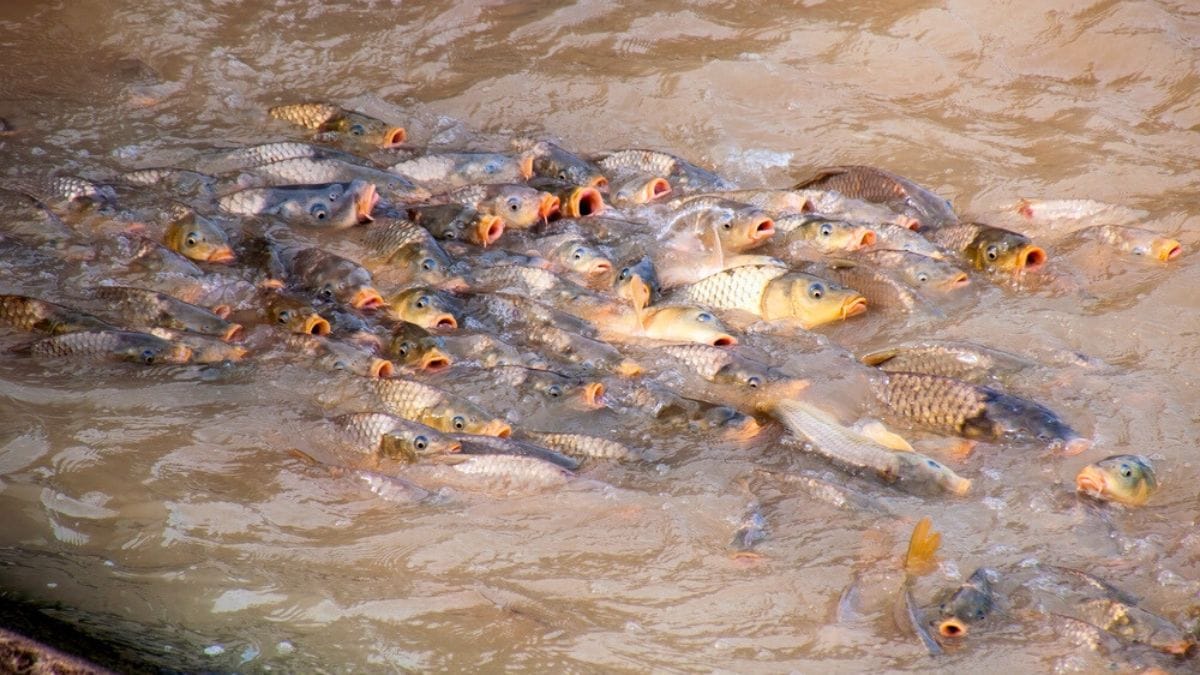
The destruction of native vegetation, poor water quality and invasive species such as foxes and carp have also taken their toll.
It is increasingly clear the Lower Murray region is changing at a rapid rate, to a drier and warmer climate with less flow and more extreme droughts.
To a casual observer, these lower stretches of the Murray appear to be doing okay.
The river typically has water, thanks in part to how it is managed, and it still experiences big replenishing floods.
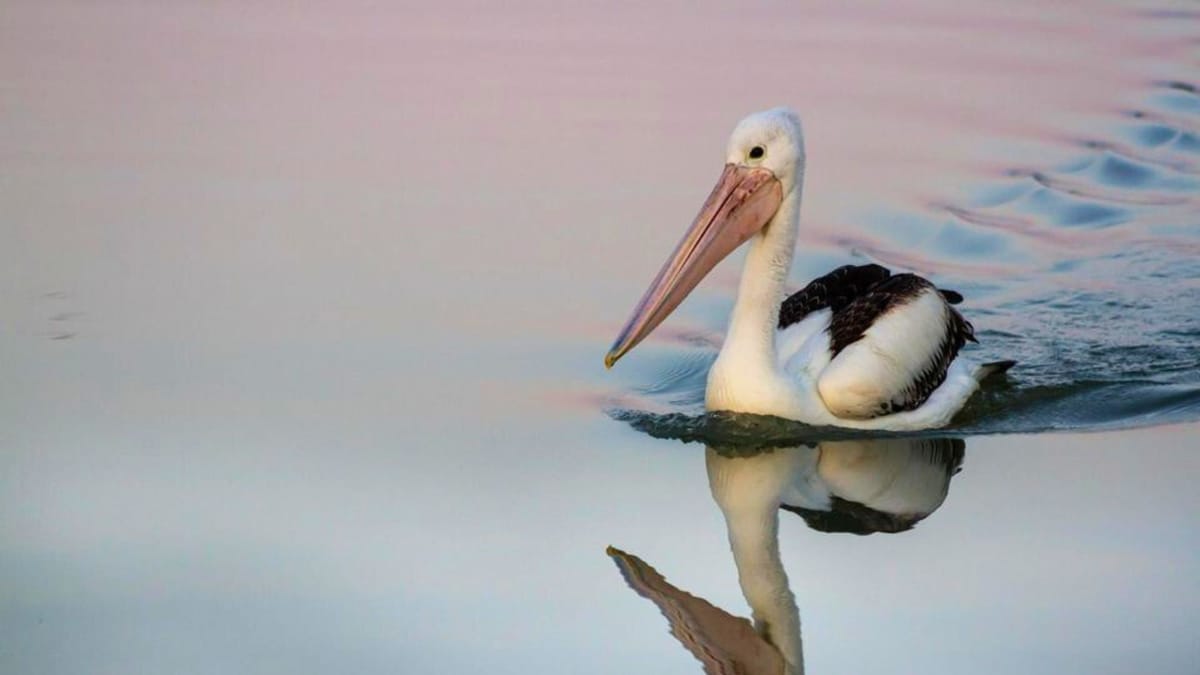
You can still catch an iconic Murray cod, pondi in Ngarrindjeri language, and the pelican, no:ri in Ngarrindjeri, still effortlessly roams the Coorong.
But look more closely and the danger signs are clear.
Signs of a slow death
Many wetlands on the floodplain have dried up, depriving native animals of their homes, and the several-hundred-year-old river red gums are dying.
Poor water quality and algal blooms are now common threats in the lakes and Coorong.
The true state of the Lower Murray became evident during the Millennium Drought of the 2000s.
Between 2007 and 2010, no flow was discharged out the Murray Mouth, with floodplain wetlands drying and the water level of the Lower Lakes dropping to below sea level.
This caused the drying of the habitats of freshwater animals and exposed acidic sediments in the Lower Lakes.
The Coorong became hypersaline – five times as salty as the ocean, above what most animals and plants could survive.
The Millennium Drought led to the near ecological collapse of Lower Lakes and Coorong, and hints at what the future may hold if the Lower Murray ecological community becomes extinct.
An extinct river is one so fundamentally degraded that it no longer functions as it should.
Everything relying on it suffers or disappears.
Protecting the river
The Lower Murray ecological community was first listed as threatened in 2013, before losing that status later the same year.
It was nominated again in 2023 with a rigorous, science-based assessment, and was approved in mid-January 2026.
Recovery will take considerable effort.
Australia’s independent Threatened Species Scientific Committee undertook the Lower Murray’s assessment, and gave advice to federal Environment Minister Murray Watt, who made the final decision.
This listing is a wake-up call.
The conservation advice identifies what actions are needed to protect and restore the river, lakes and wetlands.
These include connecting with communities so the recovery becomes a shared responsibility, and greater research and monitoring to guide management.
The listing does not halt existing activities such as agriculture.
But major new developments must now consider impacts on the ecological community, including its critical habitats and key species.
Returning water to the Murray through the Commonwealth’s water for the environment program has been important, and must continue as the review of the Murray Darling Basin Plan takes shape.
Beyond more water for the river, complementary measures such as creating fish ladders and reducing invasive species will be needed to give the environment a fighting chance.
Nick Whiterod is a researcher at Adelaide University. Margaret Shanafield is an associate professor of hydrology and hydrogeology at Flinders University. Thomas Prowse is a senior lecturer in the School of Biological Sciences at Adelaide University.