Moorundi executive Steve Sumner wins Premier’s NAIDOC Award for 2026
The Ngarrindjeri elder and outgoing health service executive has been recognised for a lifetime of work making life better for his people.

This story is now free to read. Help Murray Bridge News tell more stories like this by subscribing today.
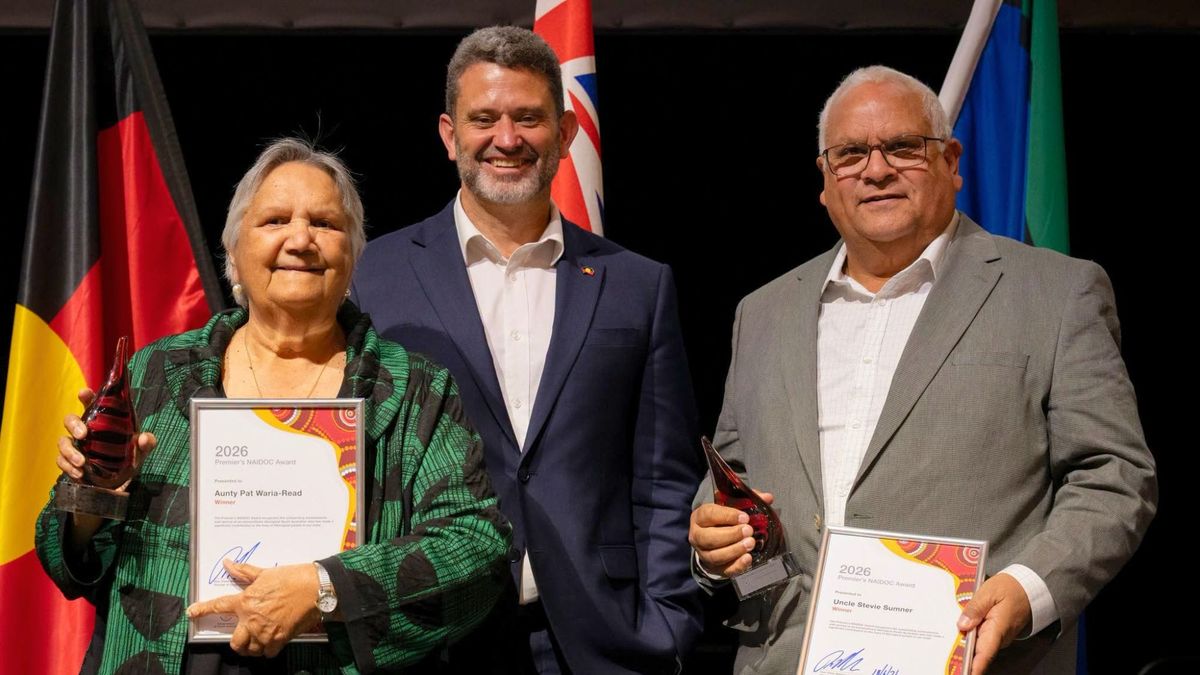
Ngarrindjeri leader Steve Sumner has been awarded a rare honour: being named one of two winners of the Premier’s NAIDOC Award for 2026.
The retiring chief executive of the Moorundi health service was given the award in Adelaide on Monday night, only hours after being named the Ngarrindjeri nation’s male elder of the year.
Acting Premier Kyam Maher praised Mr Sumner for his efforts to elevate Aboriginal voices and deliver culturally responsive, community-led health care.
Over more than 20 years, Mr Sumner was central to efforts to establish a Ngarrindjeri owned and operated health service at the site of the former Lower Murray Nungas Club on Adelaide Road, Murray Bridge.
That vision became a reality with the opening of the Moorundi Aboriginal Community Controlled Health Service’s multi-million-dollar clinic last August.
“Both Aunty Pat (Waria-Read, the other winner) and Uncle Stevie have done so much and serve as an example to current and future generations of just how much can be achieved through proud, dedicated advocacy,” Mr Maher said.
For Mr Sumner, the award represented a milestone on a long journey from rags to riches – metaphorical ones, anyway.
‘We had nothing’
Steve Sumner grew up just outside Meningie, one of 11 children to Ngarrindjeri couple Kenneth and Betty Sumner – “my heroes”.
The family lived off the land, trapping rabbits and catching fish, wearing hand-me-downs, bathing in a wood-fired copper and using a chip heater to keep warm.
They had no jobs and no electricity.
“My childhood was the most loving, supportive childhood, but we had nothing,” Mr Sumner said.
That was not by choice.
Until the late 1960s, Indigenous Australians had needed a special pass to be allowed to live or work alongside the white folks in the town, and Indigenous children were still being abducted by government authorities without any warning.
In the years after that, they still faced fierce discrimination in everyday life.
Mr Sumner remembered being told by a high school teacher to sit at the back of the class, away from the board, “because other students deserved an education over me”.
By year 10, in his own words, he ran amok.
Why should he invest his energy in an education system that didn’t give a damn about him?
The answer became clear in his mum’s tears when he told her he’d failed the year.
“To me, it wasn’t a big deal … but when I saw the pain on my mum and dad’s face, I was like, ‘I’ve just hurt the two most important people in my life … because I wanted to prove a point to some redneck,”” he said.
From that point on, he resolved never to fail again.
Public service has been his calling
His first job in the public service was as a bottom-rung clerical assistant with the Australian Taxation Office, sharpening pencils and refilling coffees and things like that.
He then became an Aboriginal liaison officer with Centrelink, helping Indigenous people engage with the system.
That role gave him the philosophy he would take into a career in the health sector: be human, engage with people, go out and talk to them in person.
“We have a simple rule here (at Moorundi) with our community programs: you can have an hour here when you start the day, then you need to be out; you can come back for the last hour of the day, fill in your paperwork and go home.
“You’re not to be sitting at your desk – we need you to be out there in the community.”
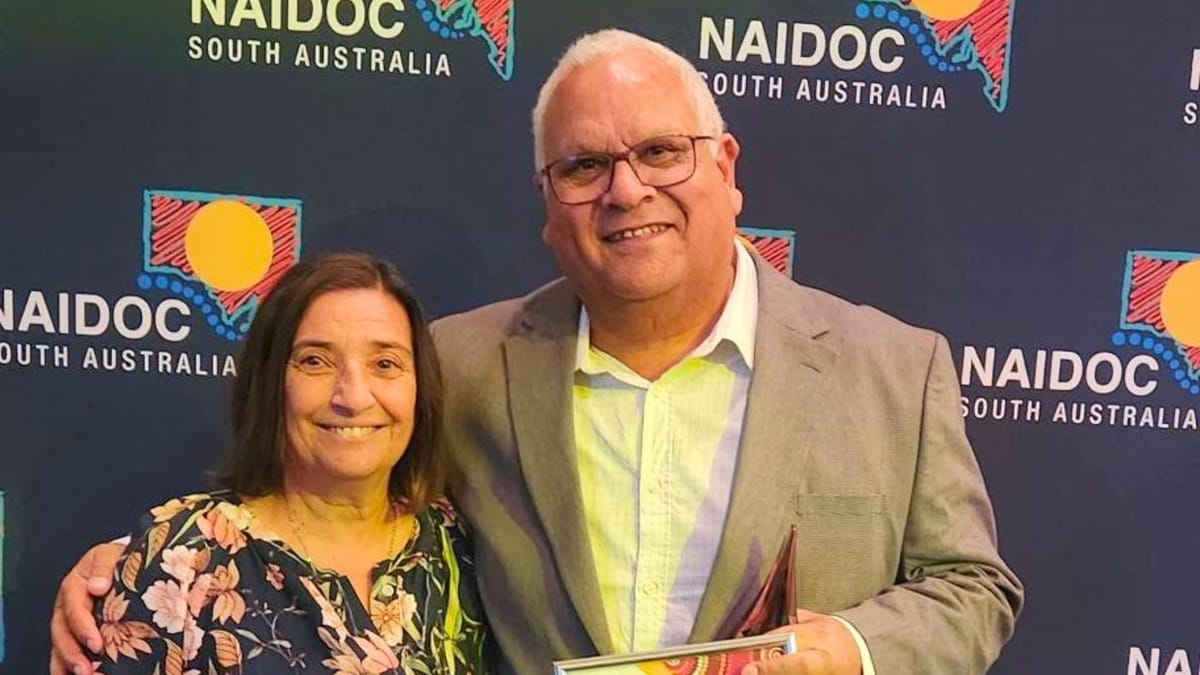
Jawun secondee Jamie Preston, who nominated Mr Sumner for this week’s award, described him as a humble man who did not seek the spotlight, but deserved to be recognised.
“His ability to connect with people, understand their experiences and share the rich culture and history of the Ngarrindjeri nation is truly remarkable,” he said on social media.
“His lifelong commitment to community, cultural leadership, advocacy, mentorship and service deserves recognition.
“As CEO of Moorundi, a respected Ngarrindjeri elder and a mentor to countless people through more than 30 years of AFL coaching, he has helped strengthen health outcomes, cultural identity, connection to country and self-determination for Aboriginal people across South Australia.”
Award ends an era at Moorundi
Mr Sumner will officially end his tenure as Moorundi’s chief executive on July 17.
Monday night’s award presentation was one of the first times he’d actually sat back and thought about how far he’d come, he said.
“My sisters, my brothers, myself, we’ve been able to achieve a lot of things despite a system that tried to hold us back in our era,” he said.
“It’s changing slowly, but we can’t allow … division, because we’re better than that.
“Our shared history is not a good one, but our shared future could be much better.”
Previous winners of the Premier’s NAIDOC Award include Mr Sumner’s sister, Eunice Aston, a respected worker in the health and care sector in her own right; and dancer and environmental advocate Major “Moogy” Sumner.