Simone Bailey reveals her local government ambitions
The outgoing Mid Murray mayor and Labor election candidate has set her sights on a new local government role.

This story is now free to read. Help Murray Bridge News tell more stories like this by subscribing today.
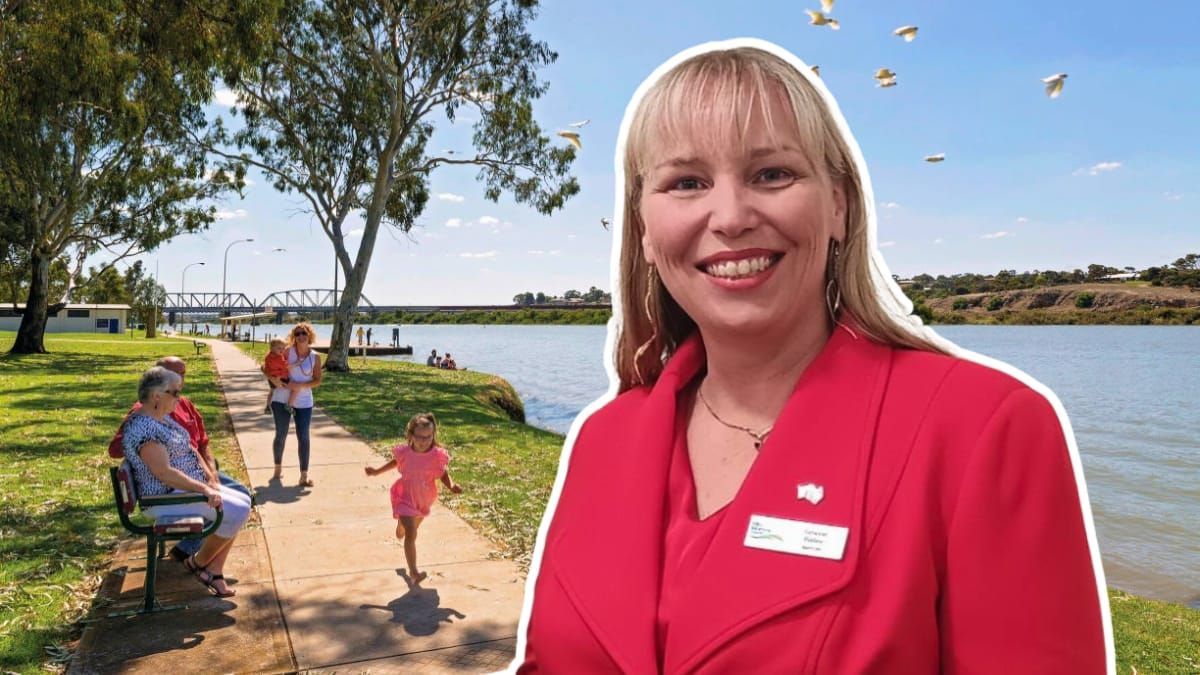
Five months after declaring she would step down as mayor of the Mid Murray district, Simone Bailey is launching a campaign for another role in the local government sector.
Ms Bailey is one of four candidates vying to be the next president of LGA SA, the peak body for the sector in South Australia.
It’s a role which involves advocating to the state government on behalf of the state’s 68 councils.
But to be eligible for it, she has to remain a member of one of those councils.
If she still planned to step down as Mid Murray mayor, then, what was the plan?
Ms Bailey told Murray Bridge News that, if her LGA campaign were successful, she intended to run for election to the Murray Bridge council – not as mayor, but as a councillor.
Speculation had been mounting in the community that she might challenge incumbent Mayor Wayne Thorley, but she confirmed that would not be the case.
The LGA presidency and Murray Bridge mayoralty were both big jobs, Ms Bailey suggested.
Each role deserved undivided attention, and it would be better if they were done by separate people.
Besides, she said, jumping from one council to another would be challenging enough.
“To do a mayor role and get results, you have to know a lot about the internal workings of the council,” she said.
“It would be a waste … to go straight into a mayor role without understanding (the) council first.
“I won’t be going for mayor.”
The LGA presidency has gone to ordinary councillors before, including Central Yorke Peninsula’s Malcolm Germain in the 1980s, Tatiara’s John Ross in the 1990s, and Adelaide’s Sue Clearihan on an interim basis in 2018.
The president of LGA SA earns an allowance of just over $65,000, as of 2024, an amount which is due to increase at the organisation’s annual general meeting in December.
That allowance is in addition to whatever they earn as an elected member.
Local government sector needs to regain people’s trust
Ms Bailey’s pitch to the wider local government sector was simple: SA’s councils needed to advocate more loudly for their own interests, but also prove themselves worthy of the public’s trust.
A recent LGA survey had shown that just 44 per cent of member councils were happy with the organisation, she said.
“That’s concerning – that says we’re doing something wrong,” she said.
“The LGA ... its purpose is to advance and promote local government in South Australia, and seeing the papers and the radio, I’m not sure that’s happening.”
If elected LGA president, she promised to:
- Challenge cost-shifting from higher levels of government
- Demand financial discipline and accountability from LGA SA itself
- Advocate firmly for the local government sector
- Seek equity, not just equal treatment, among SA’s diverse councils and communities
To that end, she hoped to lean on the relationships she had built with those in power both as a mayor and a Labor election candidate, though she acknowledged she might end up at loggerheads with her party colleagues.
If her campaign fell short, Ms Bailey said, she would have to think further about whether to run for election to the Murray Bridge council.
Perhaps defeat would be a sign that she should leave the local government sector altogether.
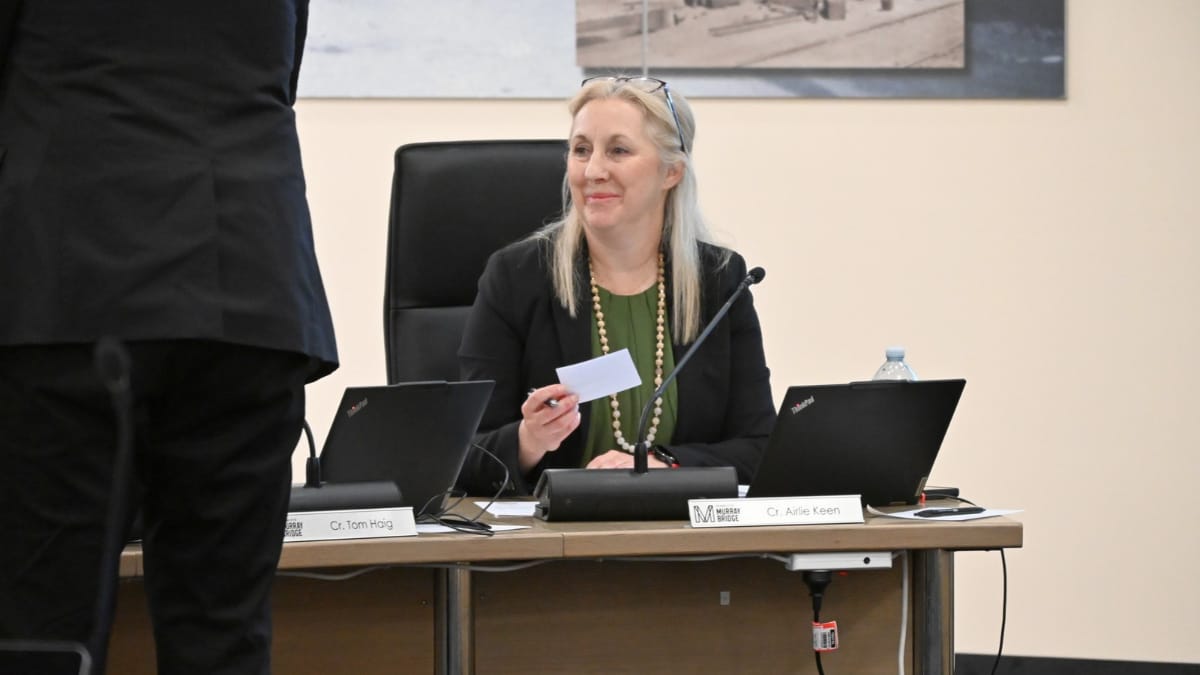
Election pain lingers in the Murray Bridge council chamber
Councils around South Australia will cast their votes in the LGA’s presidential election when they meet this month, including the Coorong and Ms Bailey’s own Mid Murray council next week.
But her adopted community of Murray Bridge voted on Monday night – and not for her.
Instead they went for Victor Harbor’s Moira Jenkins, on the basis that Ms Jenkins came from another growing community and would understand the issues Murray Bridge faced.
Councillor Airlie Keen – who ran against Ms Bailey at the state election in March, and complained about being targeted by Labor during that campaign – offered some pointed criticism.
She questioned whether Ms Bailey was correct to say that the Mid Murray council “no longer had debt”.
It was a theme to which she would return later in the meeting, arguing that Ms Bailey’s council relied too heavily on cash advance debentures: a local government borrowing facility, a bit like a credit card you might use in case of emergencies.
Cr Keen also started down a line of questioning about Ms Bailey’s interest in the Murray Bridge council, but Mr Thorley shut her down.
Those questions were causing distress to some of the other councillors, Mr Thorley said; he did not name Mat O’Brien or Lisa Courtney, both Labor Party colleagues of Ms Bailey.
In any case, the Murray Bridge councillors ended up putting Ms Bailey second on their LGA ballot.
The presidential election will be decided on November 9, and the new president will take office in December.
All four candidates are from regional SA: Ms Bailey, Ms Jenkins, Port Pirie’s Leon Stephens and Kimba’s Dean Johnson.
Correction: The survey mentioned was of member councils, not the general population; and it referred to LGA SA, not the local government sector at large.