Peter Squires remembered for his love of family and Tailem Bend – and his adventures
Hundreds have gathered to remember the founder of Old Tailem Town at a town hall funeral service.
This story includes contributions from Tina Squires and is now free to read. Help Murray Bridge News tell more stories like this by subscribing today.
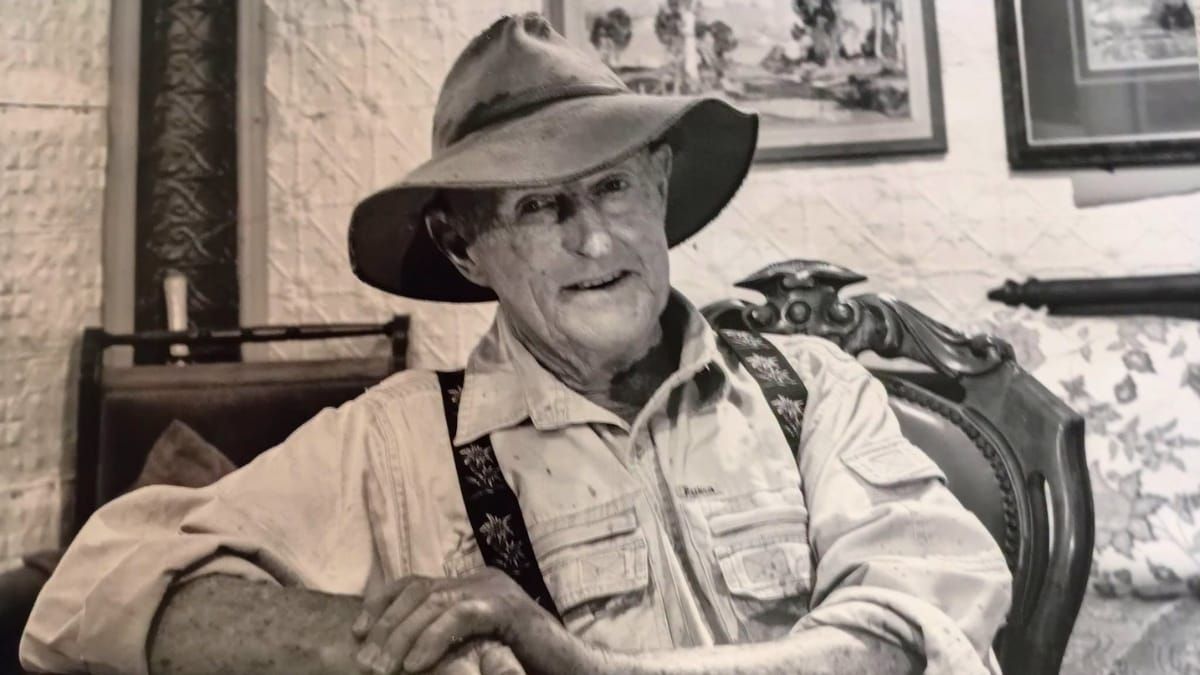
A full house has gathered at the Tailem Bend Town Hall to remember Peter George Squires OAM, affectionately known as “Squasher”, whose life was shaped by family, friendship, adventure and an enduring love for his childhood home on the Murray River.
The story of Mr Squires’ remarkable life was shared by Tina and Danny Squires at his memorial service, offering those gathered an opportunity to discover parts of his story that many may never have known.
He was born at Parkside Hospital in Adelaide on November 8, 1938, to Nada and Lloyd Squires.
He spent his early years at Rose Park, where he formed lifelong friendships.
His connection with Tailem Bend began through his grandparents, whose farm stood on the banks of the Murray River.
School holidays became an exodus by steam train to Tailem Bend, where Peter and his friends lived what Tina and Danny described as a “Huckleberry lifestyle”.
They explored 200 acres of swamp, fished, built rafts, rowed across the river, rolled down cliffs in tyres and soapboxes, and enjoyed adventures on Rocket the draught horse and Micky the Shetland pony.
They ventured into the 1000 acres of scrub, smoked mallee roots, built forts and threw bamboo spears using bamboo woomeras.
When Peter was eight, his parents parted company, and he went to live permanently at Tailem Bend with his grandparents, great-uncle and cousins.
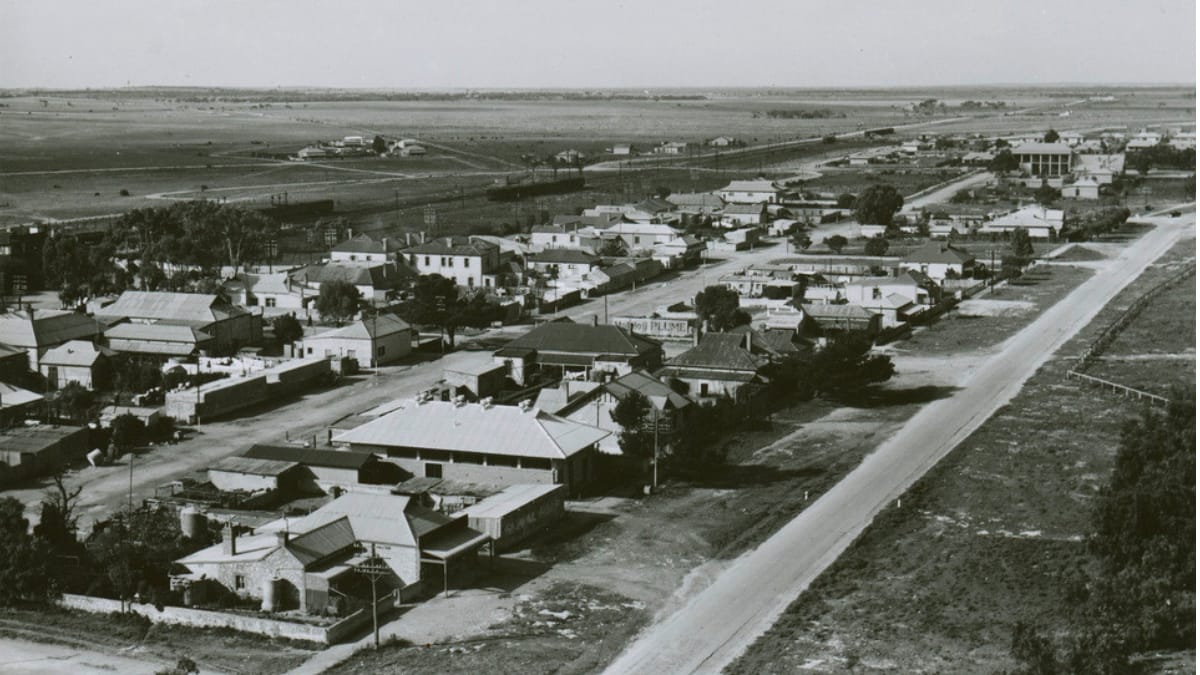
Each day, he rode three miles to school with his cousin Jenny, who became his foster sister.
On frosty mornings they stood on their bicycle pedals, rags wrapped around their hands to prevent chilblains, while watching the steam trains pass.
Halfway to school was a fettlers’ camp, where around six families lived in tents with wooden floors and wood stoves.
On rainy days Peter and Jenny would shelter there, and the fettlers would give them food.
When they were hungry, they had another solution: two quiet cows named Freisa and Brindle.
They would simply help themselves to the milk.
“Pappa George couldn’t work out why some days there was no milk,” Tina and Danny recalled.
It was Mr Squires’ relationship with his grandfather, Pappa George, that helped shape his lifelong love of the past and of home.
He remembered raking leaves for bonfires while listening to stories of his grandfather’s time in the Northern Territory as a telegraph operator on the Overland Telegraph between 1895 and 1910.
There was also the story of Pappa George’s first motor vehicle.
Having previously only ridden horses, he crashed into a fence while pulling back on the steering wheel and saying, “whoa”.
He never drove it again.
Perhaps, the family suggested, Mr Squires had inherited something from his grandfather, because many a vehicle he drove later ended up with dents from “unknown sources”.
Among them was a brand-new four-barrel Valiant Pacer, which famously came to grief with a Stobie pole in front of the railway institute.
Peter attended high school at Murray Bridge with Jenny, clambering aboard the old RX steam train when it stopped at the railway line, hitching rides home along the highway and racing for the train when necessary.
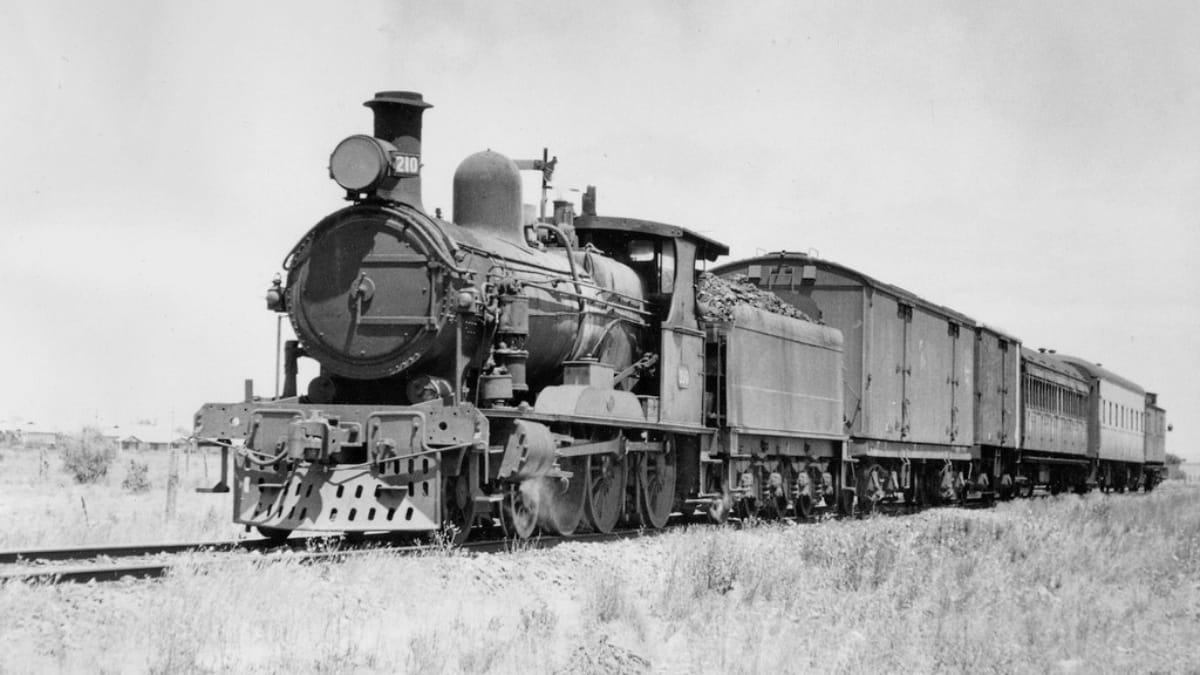
At 15, after his mother remarried Aubrey Heynen, known as Aub, Peter began working at the local Eudunda Farmers general store, weighing sugar, flour and other goods.
He later worked for his father Lloyd at his panel-beating business in Eliza Street, Adelaide, followed by two years at Gilbert Motors.
But his heart remained in Tailem Bend.
He returned home to work at Heynen Motors, spending five years helping Aub build a successful Chrysler dealership and Chamberlain business.
Then came another chapter: following a failed young romance, Peter set off to find himself.
Four years followed, taking him to New Zealand, where he worked as a barman and panel beater; to South Africa, following a chance meeting that led to work with Sydney Chrysler in Johannesburg; and eventually to London, where he worked at Barkley Square Motors, selling luxury cars to the rich and famous.
His adventurous spirit took him further still.
Mr Squires bought a third share in a trimaran yacht with two mates and sailed from England back to South Africa via the Suez Canal, eventually selling his share in Durban.
Renewed and refocused, he returned to Tailem Bend.
There he met his future wife, Betty Mason, who already had two sons, Greg and Terry.
Their son Danny was born later.
Mr Squires returned to work with his stepfather Aub, but after 10 years of marriage, he and Betty parted ways.
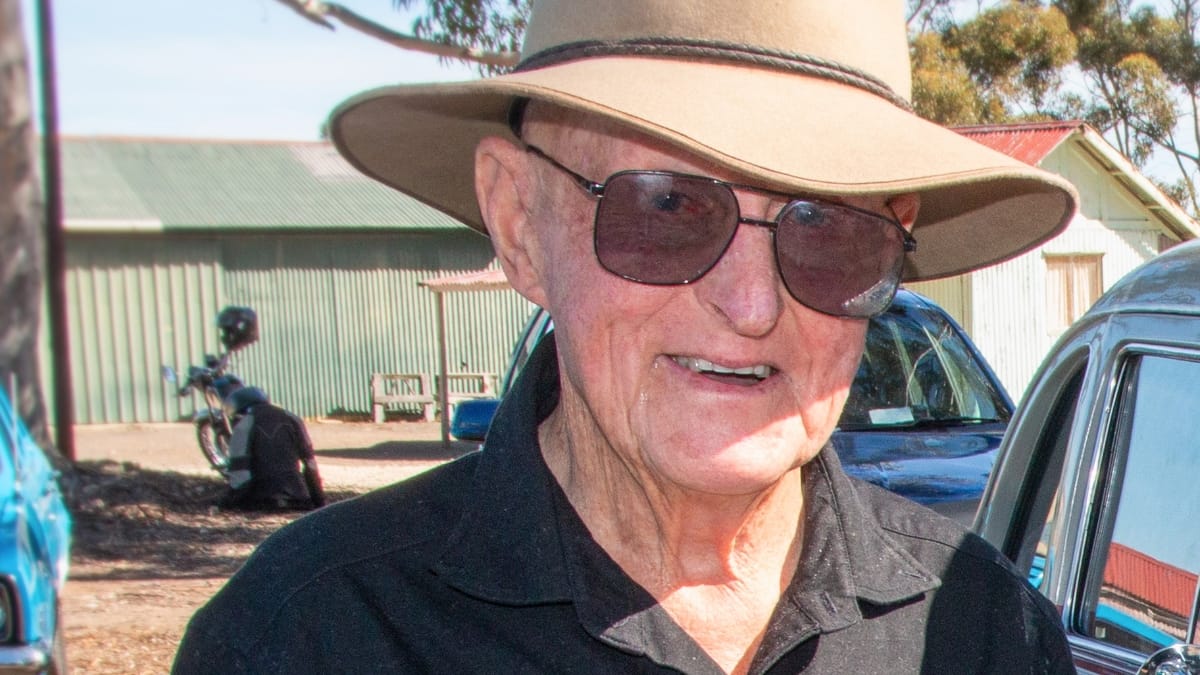
Mr Squires’ love of community also became an important part of his life.
He founded the Tailem Bend Lions Club, having previously been a member of Rotary before his frequent travels resulted in him being asked to leave because he missed too many meetings.
He went on to design the Lions Club banner and spent time serving with St John Ambulance.
After both his grandparents passed away, his childhood dreams finally came true when he purchased the family farm, the place that had been at the heart of so many of his earliest memories.
Then, when he visited Swan Hill Pioneer Village with Danny, another, bigger dream began to take shape: a dream born from his memories, his love of history, and his desire to preserve the past.
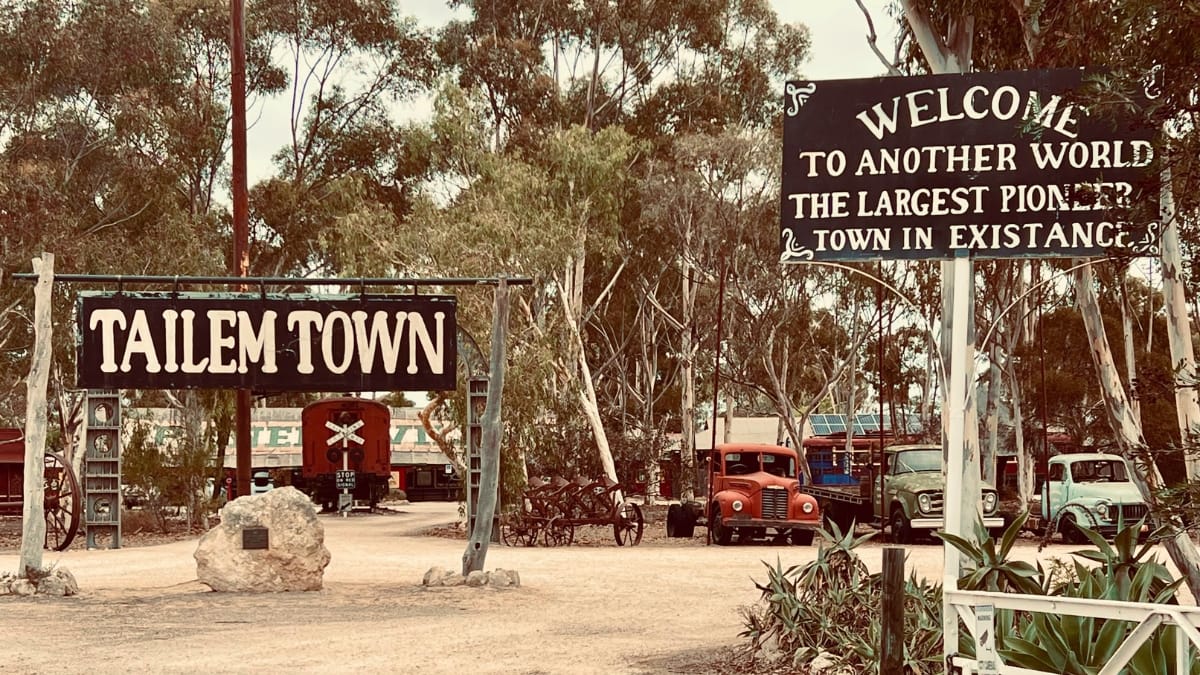
On Monday, as family, friends and members of the Tailem Bend community gathered in a packed town hall to celebrate his life, those memories painted a picture of a man who was much more than many may have realised.
Peter “Squasher” Squires was a traveller, adventurer, businessman, community man, storyteller, father and friend.
But above all, he was a man whose heart always belonged to Tailem Bend and a childhood home that remained part of him throughout his extraordinary life.
- Read more: Peter Squires leaves a lasting legacy at Old Tailem Town
- Read more: Old Tailem Town’s Peter Squires OAM will go down in history