How the latest technology helps your GP offer better care
The team at Murray Bridge Medical Centre introduce some of the systems and pieces of equipment which are helping them offer you quicker and more consistent care.

This sponsored story is brought to you by Murray Bridge Medical Centre.
Technology is changing the face of regional health care, making it easier for clinics to provide consistent care and even reducing wait times for doctor’s appointments.
In recent years – and particularly since COVID-19 – medical technology has come along in leaps and bounds, including at Murray Bridge Medical Centre.
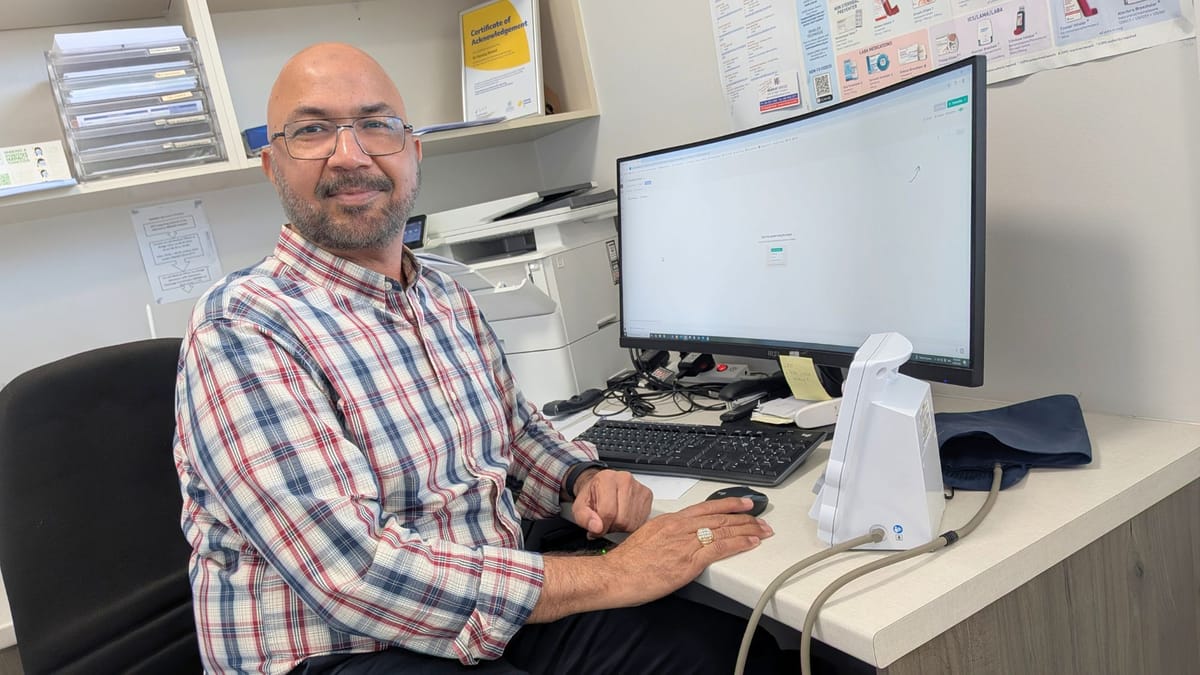
Here to speak about some of the recent advances proving helpful in the Murraylands are practice manager Wendy Ziersch and GPs Farooq Ahmad and Taslima Akther.
Digitised health records allow for consistent care
If you’re a new patient at Murray Bridge Medical Centre, or moving to a new GP, one of the first things you’ll find is that they can get right up to speed with your medical history.
If you give your consent, the federal government’s My Health Record system can make your medical records available to any GP or specialist.
That way, you won’t have to remember all the diagnoses you’ve had and medications you’ve been prescribed over the years – your doctor can just look it up.
“If your doctor leaves and another doctor continues your care, there will be continuity … at whatever clinic you go to,” Wendy says.
“Wherever you go, you’re going to be heard.”
“If a newer patient has lots of medical conditions, or they are an older patient, we can tell what has happened with them in the past,” Dr Taslima says.
A new piece of software being introduced at Murray Bridge Medical Centre next week will allow you to opt into an email notification system for new test results, too, instead of having to wait for a phone call or in-person appointment.
AI transcription tool means more quality time for patients
When you book a doctor’s appointment, you want your GP to be able to focus on you and your needs – not staring at the words they’re typing out on a screen.
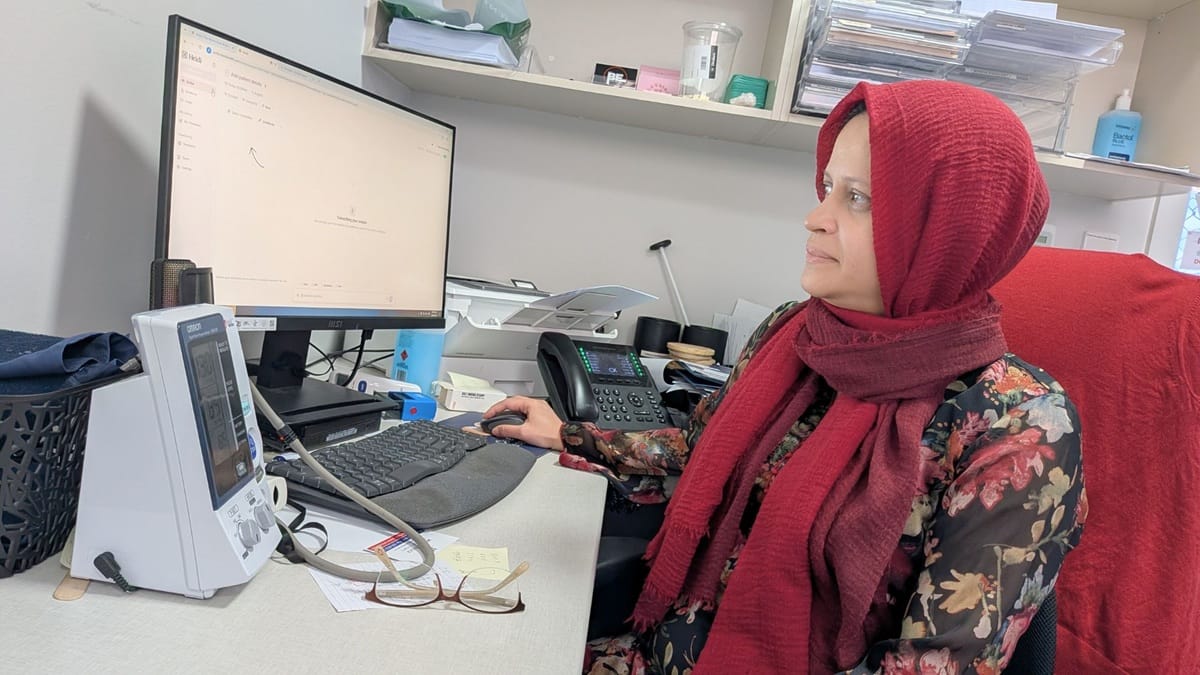
With your consent, an AI transcription tool called Heidi can help the medical centre’s GPs record their interactions with you, freeing up more of their time to concentrate on your care.
“It’s extremely helpful,” Dr Farooq says.
“In the past, after a consultation we would have to start typing, thinking, and going through all the questions and answers provided by a patient: since when have you been having pain, how bad is it on a scale of 1-10 and so on.”
Automating the process means doctors’ notes – which they can check after every appointment – are typically more accurate.
Cutting out typing time also cuts down the delay between one appointment and the next, which means less time in the waiting room for patients.
Handheld tablet helps with diagnosis
Another fancy piece of tech used at Murray Bridge Medical Centre is a MESI tablet able to connect wirelessly to all kinds of diagnostic equipment.
If you need an electrocardiogram, a lung function test or an ankle-brachial index test, for your blood pressure, the machine can record the result and put it directly into your patient file, where your GP can access it straight away.
Staff at Murray Bridge Medical Centre can even take a photo of a wound and send it directly to experts in Adelaide for further advice.
For example, the specialists in the burns unit at the Royal Adelaide Hospital may be able to advise on the best way to dress and treat a severe burn.
The technology is all fascinating, and it’s advancing all the time – making for better care for patients like us.
- More information: Visit Murray Bridge Medical Centre at 35-37 Adelaide Road between 8am and 5pm on weekdays, call 8531 2988 or visit www.murraybridgemedical.com.au.
Advertising to more than 20,000 highly engaged locals can do wonders for your business. Call Jane Intini on 0418 835 768 or email jane@murraybridge.news.
 Peri Strathearn