Can these trees and shrubs help Murray Bridge adapt to climate change?
A woody meadow will help scientists assess the suitability of low-maintenance, drought-tolerant native plants for the warmer, drier climate the Murraylands may experience by 2050.

This story is now free to read. Help Murray Bridge News tell more stories like this by subscribing today.
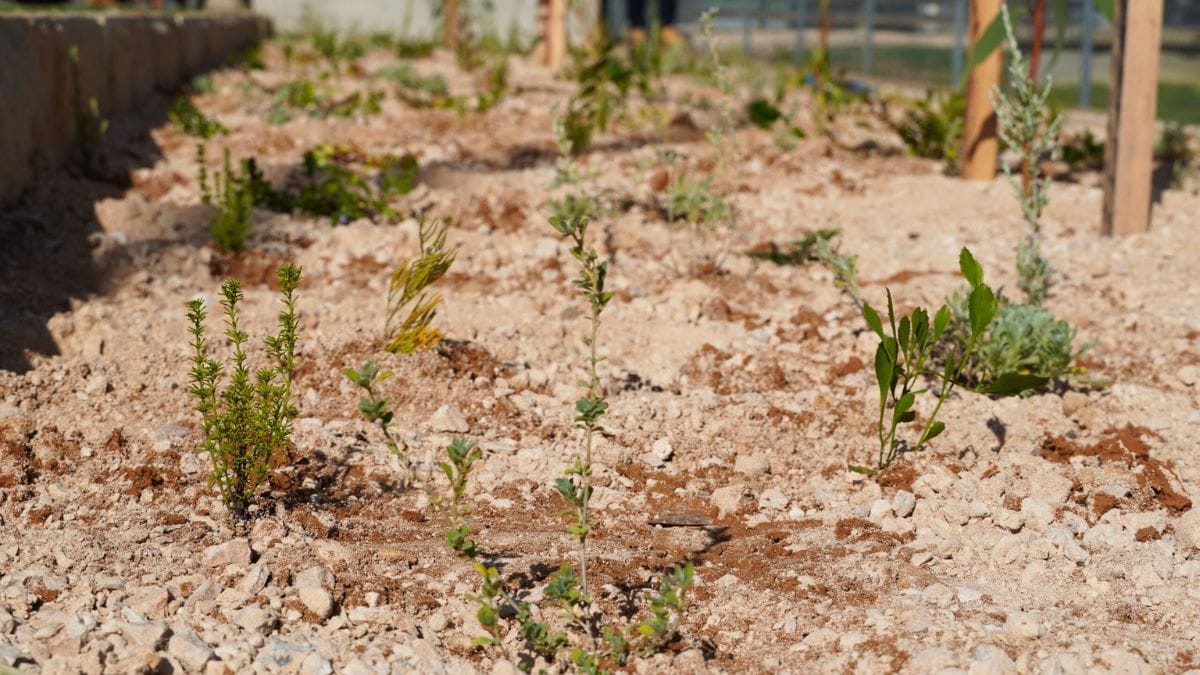
It might look like an ordinary garden bed, but this patch of trees, shrubs and ground cover is also a first-of-its-kind experiment in adapting to climate change.
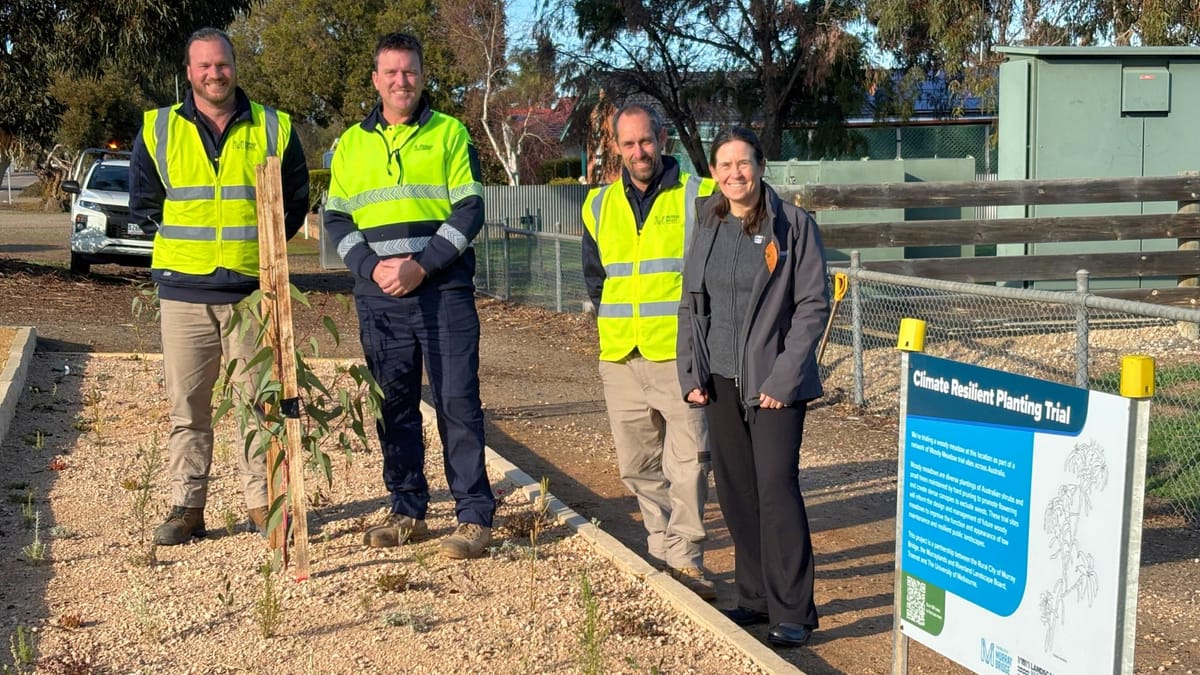
The “woody meadow” was planted beside a shelter on Swanport Road, Murray Bridge last month, and is the first of its kind in South Australia.
Over the next five years, scientists from the University of Melbourne and Treenet, and staff from the Murray Bridge council and Murraylands and Riverland Landscape Board, will monitor the site to see whether it is able to flourish in local conditions.
Plants were chosen for their ability to thrive with minimal amounts of water and low maintenance.
The trial should make the area more visually appealing, with more native plants and fewer weeds.
But it may also show us whether plants can help reduce the level of heat generated in urban areas, protecting locals from the effects of increasing temperatures.
“As our towns become hotter and drier, it’s important we look at climate-resilient planting options that are water efficient, low-maintenance, and support biodiversity,” landscape board member Tammy O’Malley said.
“Woody meadows planting not only add colour and character to streetscapes, but they also provide food and shelter for insects, birds, and small mammals.”
Murray Bridge council infrastructure and environment general manager Thuyen Vi-Alternetti hoped the planting would inspire local residents to think about planting drought-tolerant species in their own gardens, too.
“We hope this project sparks community interest in dry-tolerant native garden plants, while also showing how councils can incorporate these hardy native plants into urban plantings which are both beautiful and resilient,” she said.
More than 400 plants grown at nearby State Flora have been planted as part of the trial, including a handful of goldfields blackbutt trees which reportedly do well in central Western Australia.
- Take a look: Visit the planting site in front of Kuchel Park, on Swanport Road, Murray Bridge near the corner of Burdekin Avenue.
- More information: flow.landscape.sa.gov.au/woody-meadows-trial-MB.
Climate change could have us sweating by 2050
The trial follows the release of the first national climate risk assessment for Australia last month.
Modelling by the Australian Climate Service shows what effects we may feel within the next 25 years if nations and corporations do not increase their efforts to slow down climate change.
Worldwide temperatures are already 1.2 degrees above pre-industrial levels, but could get as high as 3 degrees above those levels by 2050 if global greenhouse gas emissions continue to rise.
In the Murraylands, as well as warmer weather throughout the year, that would mean:
- six extra days per year in heatwaves of up to 46 degrees, risking the health of the elderly and young children
- five extra days per year with temperatures above 40 degrees
- twice as many days of dangerous bushfire weather, with high temperatures and winds and low humidity
- lower annual rainfall
- drought conditions up to 25 per cent of the time, reducing agricultural output – like the current potato shortage
- inundation of Lake Alexandrina and the Lower Murray as sea levels rise
National Climate Change Minister Chris Bowen said the modelling had shown that no Australian community would be immune to climate change.
“Australians are already living with the consequences of climate change today, but it’s clear every degree of warming we prevent now will help future generations avoid the worst impacts in years to come,” he said.
- More information: www.acs.gov.au.